A Practical Guide to Molded Case Circuit Breakers
What is an MCCB?
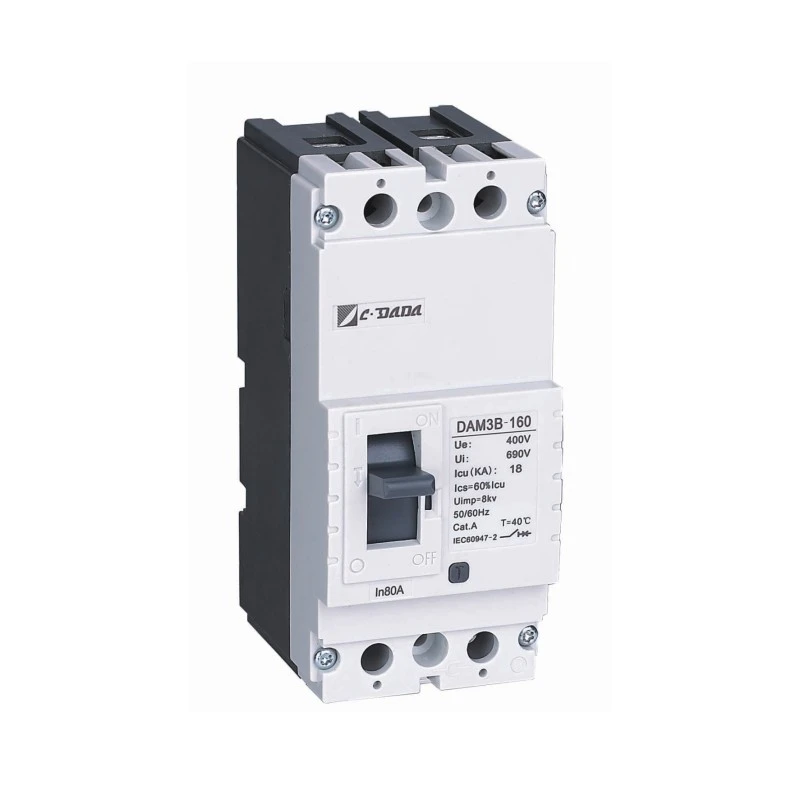
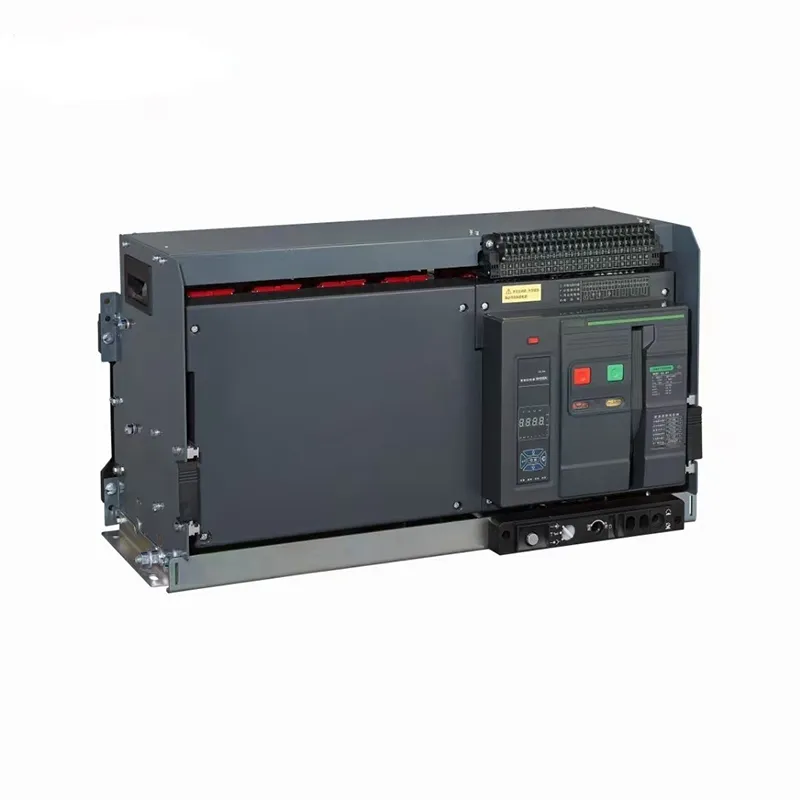
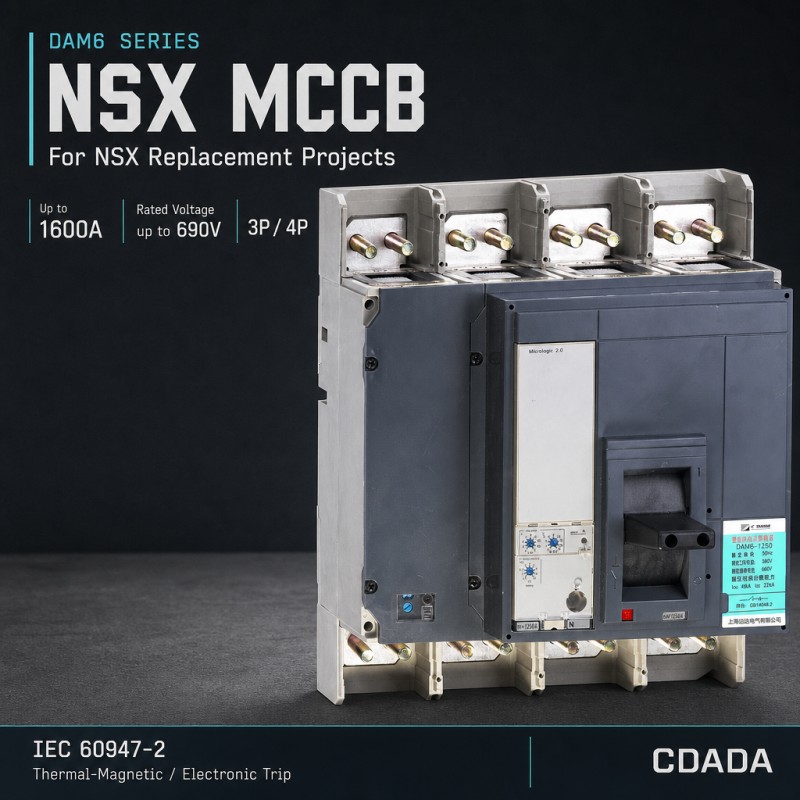
An MCCB — molded case circuit breaker — is a low-voltage protective device that automatically disconnects a circuit when it detects overload or short-circuit conditions. Unlike a fuse, it can be reset and reused after a trip. Inside the molded case, a thermal-magnetic trip mechanism handles two jobs: a thermal element responds to sustained overload, while a magnetic element reacts instantly to short-circuit faults. The result is protection that matches the way real electrical loads behave.
When to choose an MCCB: main incoming feeders, three-phase distribution panels, large motor circuits, or any point where the prospective short-circuit current exceeds what an MCB can interrupt.
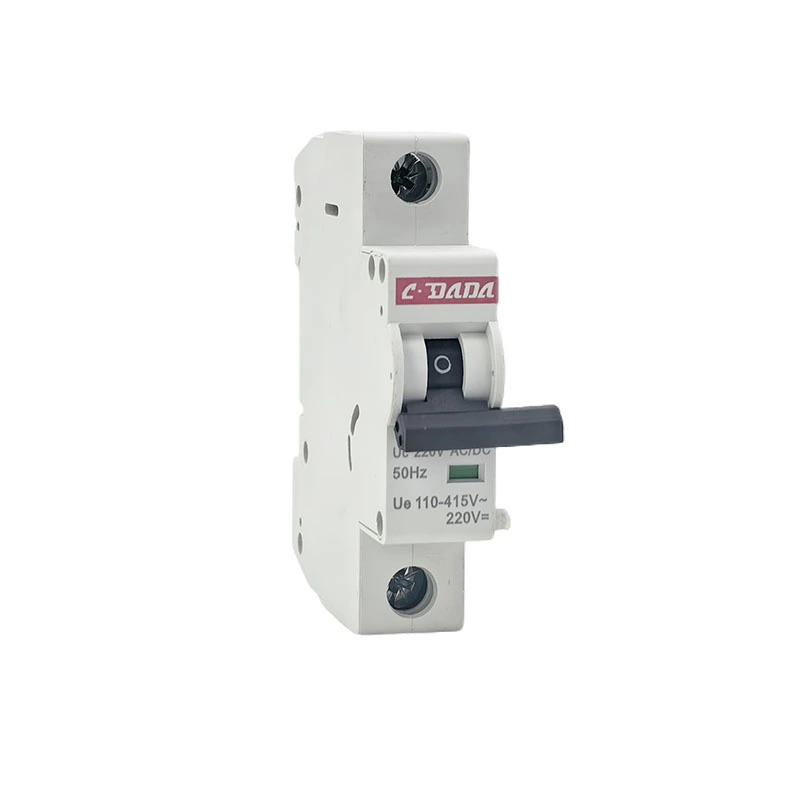
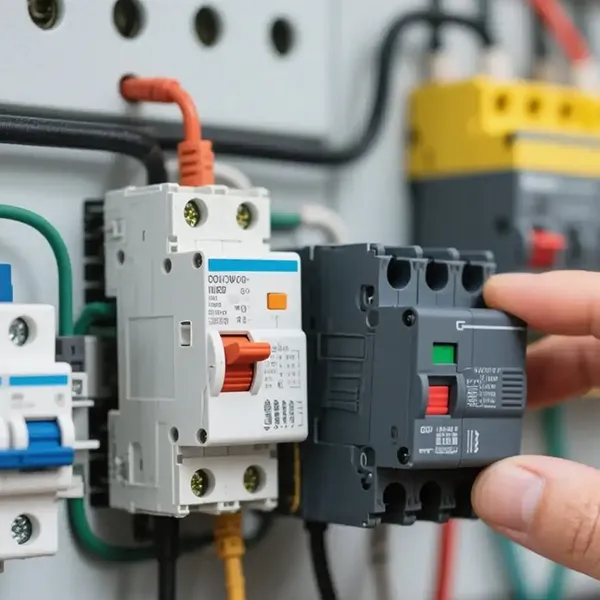
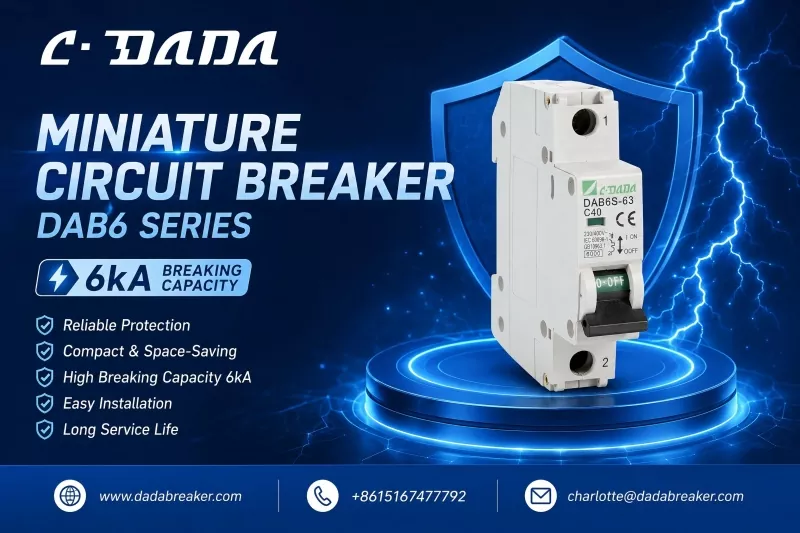
When an MCB is enough: final sub-circuits with modest loads and low fault levels — residential boards, lighting and socket circuits.
How to select the right MCCB
Rated current (In)
1. — match the continuous load, and allow headroom for starting currents of motors.
Breaking capacity (Icu / Ics)
2. — must be higher than the prospective short-circuit current at the installation point. The higher the fault level, the higher the Icu you need.
Poles
3. — 3P for three-phase systems, 4P where the neutral also needs disconnection.
Voltage ratings
4. — check rated operational voltage (Ue), insulation voltage (Ui) and impulse withstand (Uimp) against the system.
Standards and certification
5. — IEC/EN 60947-2 compliance and CE marking are the baseline for international projects.
Application
6. — motor protection, power distribution and industrial installations may require different frame ratings and trip characteristics.
What a well-specified 250A MCCB looks like:
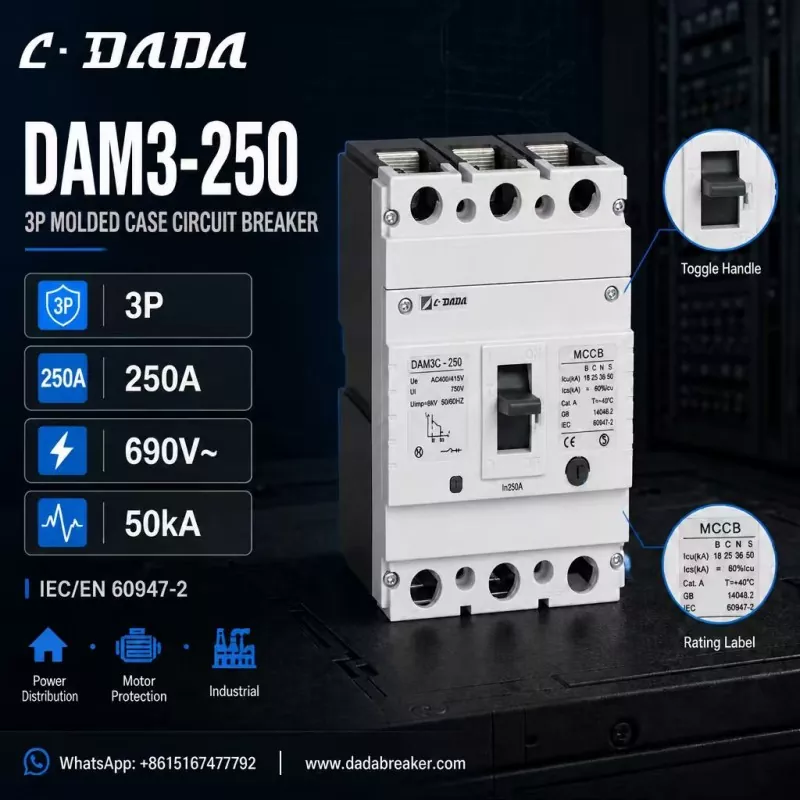
To make this concrete, consider the DAM3-250 from C·DADA Electric — a 250A three-pole MCCB that illustrates what to look for in this class of device:
3P configuration
● with a 250A rated current (In), suitable for three-phase distribution boards
Voltage ratings:
● 690V~; Ue AC400/415V, Ui 750V, Uimp 8kV
Breaking capacity up to 50kA
● — Icu of 18 / 25 / 36 / 50 kA across the B / C / N / S variants, so installers can match fault levels at different points of the network
IEC/EN 60947-2 and GB 14048.2 compliance
● CE marked, with a clear ON/OFF toggle handle for visible operating status
● Built for power distribution, motor protection and industrial applications
The logic behind this specification: a 250A, 3-pole frame with 50kA class breaking capacity covers the majority of panel builder and contractor needs — from main distribution boards to motor feeder circuits — while the multiple Icu variants let you right-size cost against actual fault levels.
Selection recommendation
● For final circuits up to ~125A with low fault levels, an MCB is the economical choice.
● For main distribution, motor protection and industrial switchgear, choose an MCCB with breaking capacity that exceeds the installation's prospective short-circuit current.
● When in doubt, size one class up on breaking capacity: the cost difference is small, while the protection margin can be the difference between a minor fault and a major outage.
Frequently asked questions
Q: What is an MCCB?
A: A molded case circuit breaker is a resettable low-voltage protective device that disconnects a circuit on overload or short-circuit, designed for higher currents and fault levels than a miniature circuit breaker.
Q: What does Icu mean on an MCCB?
A: Icu is the ultimate short-circuit breaking capacity — the maximum fault current the breaker can interrupt. Ics is the service breaking capacity, the level it can interrupt repeatedly and remain operational.
Q: How do I choose the breaking capacity for my MCCB?
A: Choose an Icu rating higher than the prospective short-circuit current at the installation point. Distribution boards with high transformer capacity or long industrial feeders typically need 36–50kA class devices.
Q: What is the DAM3-250 MCCB?
A: The DAM3-250 is a 250A three-pole molded case circuit breaker from C·DADA Electric, rated up to 690V with breaking capacity up to 50kA, for power distribution, motor protection and industrial applications.
Contact
● Technical Support: charlotte@dadabreaker.com
● WhatsApp: +8615167477792
● Website: www.dadabreaker.com
Related News
- How Does an NSX Moulded Case Circuit Breaker Protect Electrical Distribution Systems?
- What Is a Type A Residual Current Circuit Breaker and How Does It Protect Electrical Systems?
- What Makes an MCCB with Leakage Protection Important for Safer Power Distribution?
- What Makes a 125 15KA Miniature Circuit Breaker Suitable for High-Current Protection?
- How Does a 6kA AC Miniature Circuit Breaker Improve Circuit Protection?
- A Practical Guide to Residual Current Circuit Breakers with Over current Protection
Leave me a message