China Quality DC Inverter Supplier
DC Inverters are provided by the professional manufacturer CDADA. Our facility features nine production lines, backed by 20 years of accumulated manufacturing experience in this product category. Compliant with international standards, our products boast a service life of up to 25 years and come with a 3-year warranty.
What Is a DC Inverter?
A DC inverter, commonly known as a photovoltaic (PV) inverter or solar inverter, is a sophisticated power electronic device that converts direct current (DC) generated by solar panels into alternating current (AC) suitable for grid connection or local consumption. As the core component of photovoltaic power generation systems, the inverter performs multiple critical functions including maximum power point tracking (MPPT), grid synchronization, power quality management, and system protection.
Modern PV inverters operate across input voltage ranges from 200V DC to 1500V DC, with output power ratings from 1kW residential units to multi-megawatt utility-scale central inverters. The conversion efficiency of premium inverters exceeds 99%, with European-weighted efficiencies (η) typically ranging from 97% to 98.5%.
Unlike simple DC-AC converters, PV inverters incorporate intelligent control systems that continuously optimize energy harvest, monitor system health, and ensure compliance with evolving grid codes. The inverter essentially serves as the "brain" of the photovoltaic system, coordinating energy flow between solar modules, batteries, loads, and the utility grid.
DC Inverter Product Categories & Configurations
|
Classification |
Type |
Power Range |
Key Characteristics |
|
By Application |
String Inverter |
1kW – 150kW |
Multiple MPPT inputs, 3-phase output, commercial/residential, 98%+ efficiency |
|
Central Inverter |
100kW – 10MW+ |
Single large unit, utility-scale, transformer-coupled, cost-effective per watt |
|
|
Microinverter |
250W – 2000W |
Module-level, per-panel MPPT, enhanced shading tolerance, high reliability |
|
|
Hybrid Inverter |
3kW – 50kW |
Battery storage integration, bidirectional power flow, backup power capability |
|
|
Power Optimizer |
300W – 1000W |
DC-DC converter + string inverter, module-level optimization, rapid shutdown |
|
|
By Topology |
Transformer-based |
1kW – 10MW |
Galvanic isolation, robust, heavier, lower efficiency (96-97%) |
|
Transformerless |
1kW – 250kW |
Higher efficiency (98%+), lighter, leakage current management required |
|
|
H-Bridge |
All ratings |
Basic switching topology, PWM control, sine wave output |
|
|
Multi-level (3-level NPC/T-type) |
10kW – 10MW+ |
Reduced switching losses, better waveform quality, higher voltage capability |
|
|
By Input Voltage |
Low Voltage |
200V – 500V DC |
Residential systems, single-string configurations |
|
Medium Voltage |
500V – 1000V DC |
Commercial systems, 1000V NEC limit in US |
|
|
High Voltage |
1000V – 1500V DC |
Utility-scale, 1500V becoming standard, reduced BOS costs |
|
|
By Output |
Single-Phase |
1kW – 10kW |
Residential, 230V/120V, 50/60Hz |
|
Three-Phase |
5kW – 10MW+ |
Commercial/industrial, 400V/480V, grid-tied |
MPPT Configuration Options:
Single MPPT: Basic, lower cost, single string input
Dual MPPT: Two independent inputs, different orientations/shading
Multiple MPPT (4-12 inputs): Commercial systems, complex roof geometries
Core Functions & Operating Principle
Power Conversion Process
|
Stage |
Function |
Technical Implementation |
|
DC Input Stage |
Accepts variable DC from PV array, filtering, protection |
DC filter capacitors, surge protection, reverse polarity protection, input voltage monitoring |
|
MPPT Stage |
Maximizes power extraction by tracking optimal voltage/current |
Buck-boost or boost converter, perturb & observe (P&O) or incremental conductance algorithm, 99%+ tracking efficiency |
|
DC-AC Inversion |
Converts DC to AC using high-frequency switching |
IGBT or SiC MOSFET H-bridge, PWM control (2-20kHz), dead-time control |
|
Output Filtering |
Removes high-frequency harmonics, smooths waveform |
LCL or LC filter, damping resistors, <3% THD |
|
Grid Connection |
Synchronizes with grid, power quality compliance |
Phase-locked loop (PLL), anti-islanding protection, reactive power control |
|
Control & Monitoring |
System management, data logging, communication |
DSP/MCU control, Ethernet/WiFi/RS485, cloud monitoring, firmware updates |
Maximum Power Point Tracking (MPPT)
The MPPT function is the core technology that ensures maximum energy harvest from solar panels. Since PV modules exhibit a non-linear current-voltage (I-V) characteristic with a single maximum power point (MPP) that varies with irradiance and temperature, the inverter must continuously track this moving target.
Key MPPT Parameters:
MPPT Voltage Range: Operating window where inverter can extract maximum power (e.g., 200-850V for 1000V inverter)
Full-load MPPT Range: Voltage range for rated power output
MPPT Efficiency: >99% tracking accuracy under dynamic conditions
Scanning Speed: Response to rapid irradiance changes (cloud transients)
MPPT Algorithms:
Perturb & Observe (P&O): Most common, incremental voltage adjustments, 99%+ efficiency
Incremental Conductance (INC): Precise MPP detection, better under rapidly changing conditions
Hybrid/Advanced: Genetic algorithms, fuzzy logic, neural networks for complex shading scenarios
Grid Synchronization & Safety
Modern inverters must comply with stringent grid codes including:
Anti-islanding protection: Automatic shutdown within 2 seconds of grid loss (UL 1741/IEC 62116)
Frequency/voltage ride-through: Continue operation during grid disturbances (LVRT/HVRT)
Reactive power support: Provide VAR support for grid stability (IEEE 1547)
Harmonic distortion: <3% THD for current, <5% for voltage
Application Environments & Use Cases
|
Application |
System Size |
Typical Specifications |
Key Requirements |
|
Residential Grid-Tied |
3kW – 20kW |
Single-phase, 98% efficiency, 2 MPPT, WiFi monitoring, 10-year warranty |
Compact, quiet, easy installation, rapid shutdown (NEC 2017) |
|
Residential Hybrid |
5kW – 15kW |
48V battery, backup power, time-of-use optimization, self-consumption maximization |
UL 9540 (battery), seamless transfer, 24/7 operation |
|
Commercial Rooftop |
20kW – 500kW |
Three-phase, 98.5% efficiency, 4-12 MPPT, string monitoring, 25-year design life |
High reliability, minimal maintenance, remote monitoring |
|
Commercial Ground-Mount |
100kW – 2MW |
Central or string, 1500V DC, power line communication, IV curve scanning |
Maximum yield, O&M optimization, terrain adaptability |
|
Utility-Scale PV |
2MW – 10MW+ |
Central inverters, 1500V, MV transformer integration, grid-forming capability |
Lowest LCOE, 99% availability, grid support functions |
|
Energy Storage |
50kW – 5MW |
Bidirectional, DC-coupled or AC-coupled, frequency regulation, peak shaving |
Round-trip efficiency >90%, response time <1s, cycling durability |
|
Off-Grid/Remote |
1kW – 100kW |
Battery-based, diesel generator integration, load management, microgrid capable |
High reliability, autonomous operation, extreme environment tolerance |
|
EV Charging |
50kW – 350kW |
DC fast charging, V2G capability, high power density, liquid cooling |
99% uptime, payment integration, grid balancing services |
Manufacturing Process & Production Workflow
High-Precision Manufacturing Sequence
Component IQC → PCB Assembly (SMT) → Power Module Assembly → Heat Sink Integration → Capacitor & Magnetics Installation → Final Assembly → Burn-in Testing → Automated Final Test → Packaging
Critical Manufacturing Stages
|
Stage |
Process Details |
Quality Control Points |
|
PCB Assembly (SMT) |
High-density surface mount, 0201 components, BGA processors, lead-free solder (SAC305) |
AOI inspection, X-ray for BGAs, ICT (in-circuit test), 100% functional verification |
|
Power Module Assembly |
IGBT/SiC MOSFET die attach, wire bonding (Al/Cu), encapsulation, thermal interface material application |
Thermal resistance <0.5K/W, void-free die attach, bond pull strength >8g, 100% blocking voltage test |
|
DC Link Capacitor Integration |
Film capacitor mounting, bus bar connection, ESL/ESR minimization |
Capacitance ±5%, ESR <1mΩ, voltage withstand 1.5× rated, 100% leakage test |
|
Magnetics Winding |
High-frequency inductors, nanocrystalline or ferrite cores, Litz wire for skin effect reduction |
Inductance ±10%, core loss <2W/kg, hipot test 3kV, partial discharge <10pC |
|
Heat Sink Assembly |
Aluminum extrusion or liquid cold plate, thermal paste/pad application, mounting torque control |
Thermal resistance <0.3K/W, flatness <50μm, uniform pressure distribution |
|
Final Assembly |
Chassis integration, cooling fan installation, display/communication modules, wiring harness |
Ground continuity <0.1Ω, clearance/creepage verification, torque marking |
|
Burn-in Testing |
48-72 hour operation at 50°C, full load cycling, thermal cycling |
Early failure detection, infant mortality screening, <0.5% failure rate |
|
Automated Final Test |
Efficiency measurement (IEC 61683), MPPT verification, protection function test, grid code compliance |
100% testing, data logging, calibration certificate, serial number traceability |
Primary Raw Materials & Component Specifications
|
Component |
Material Specification |
Supplier Standards |
Key Properties |
|
Power Semiconductors |
Silicon IGBT (1200V-1700V, 200A-600A) or SiC MOSFET (1200V, 50mΩ) |
IEC 60747-9, JEDEC |
Switching frequency 2-50kHz, Rds(on) <5mΩ, Tj(max) 175°C, short-circuit withstand 10μs |
|
Gate Drivers |
Isolated gate driver ICs, magnetic or capacitive isolation |
UL 1577, IEC 60747-5 |
CMTI >100kV/μs, propagation delay <100ns, undervoltage lockout |
|
DC Link Capacitors |
Metallized polypropylene film, 400-1500V DC, 100-5000μF |
IEC 61071 |
ESR <1mΩ, ESL <20nH, 100,000 hour life, self-healing |
|
Magnetics (Inductors) |
Nanocrystalline or ferrite cores, Litz wire (Cu) |
IEC 60404-8, IEC 60317 |
Core loss <2W/kg at 100kHz, Bsat >1.2T, Curie temp >200°C |
|
Heat Sinks |
Aluminum 6063-T5 or copper, anodized or nickel-plated |
ASTM B221 |
Thermal conductivity 200W/mK, surface roughness Ra 1.6, corrosion resistance |
|
Thermal Interface |
Phase change material or silicone grease, 0.5-3W/mK |
ASTM D5470 |
Thermal resistance <0.5K·cm²/W, long-term stability, no pump-out |
|
Control PCBs |
FR-4 TG170 or high-Tg, 4-12 layer, immersion gold |
IPC-6012, UL 796 |
Tg >170°C, CTI >600V, impedance control ±10% |
|
MCUs/DSPs |
ARM Cortex-M4/M7 or dedicated DSP, 100-400MHz |
IEC 60730 (functional safety) |
SIL 2 capable, hardware FPU, ECC memory, temperature -40°C to +85°C |
|
Enclosure |
Aluminum die-cast ADC12 or steel, powder-coated |
ISO 12944, IEC 60529 |
IP65 outdoor rating, C3/C4 corrosion resistance, IK08 impact |
|
Connectors |
MC4 for DC, Harting for AC, RJ45 for communication |
IEC 62852, UL 6703 |
IP68, 30A continuous, 1000V DC, 25-year UV resistance |
Standards Compliance & Testing Protocols
International Standards Framework
|
Standard |
Scope |
Applicable Requirements |
|
IEC 62109-1/-2 |
Safety of power converters for use in photovoltaic power systems |
General requirements (Part 1) and particular requirements for inverters (Part 2) |
|
IEC 61683 |
Photovoltaic systems - Power conditioners - Procedure for measuring efficiency |
Standardized efficiency measurement, MPPT performance, acceptance criteria |
|
IEC 62116 |
Utility-interconnected photovoltaic inverters - Test procedure of islanding prevention measures |
Anti-islanding protection verification |
|
IEC 61727 |
Photovoltaic systems - Utility interface characteristics |
Grid connection requirements, power quality |
|
IEC 60068-2 |
Environmental testing |
Thermal cycling, damp heat, mechanical stress |
|
IEC 61000-6-2/-6-4 |
EMC immunity and emission |
Industrial environment immunity, residential/commercial emission |
Mandatory Type Tests (IEC 62109 & IEC 61683)
|
Test Category |
Specific Test |
Acceptance Criteria |
|
Safety & Protection |
Overvoltage category, pollution degree, clearance/creepage |
CAT III/IV, PD2/3, 8mm clearance at 1000V |
|
Protection against electric shock (IP rating) |
IP20 minimum (indoor), IP65 (outdoor) |
|
|
Ground continuity |
<0.1Ω |
|
|
Insulation resistance |
>1MΩ at 500V DC |
|
|
Thermal Performance |
Temperature rise test at full load |
Component temperatures below rated limits, Tj < Tj(max) - 25K |
|
Thermal cycling (-40°C to +85°C, 100 cycles) |
No mechanical failure, no parameter drift >5% |
|
|
Efficiency Measurement (IEC 61683) |
Euro efficiency (η) at 5%, 10%, 20%, 30%, 50%, 100% load |
>97% for string inverters, >98.5% for premium models |
|
Maximum efficiency at optimal operating point |
>98% (transformerless), >96% (transformer-based) |
|
|
MPPT efficiency |
Static >99.5%, dynamic >98% |
|
|
Environmental |
Damp heat (40°C/93%RH, 96h or 21 days) |
Functional after conditioning, no corrosion |
|
Salt mist (IEC 60068-2-52, severity 2) |
No corrosion affecting safety or function |
|
|
UV exposure (for outdoor enclosures) |
No degradation of mechanical properties |
|
|
EMC |
Electrostatic discharge (ESD) 8kV contact/15kV air |
No malfunction, no safety hazard |
|
Radiated immunity (10V/m, 80MHz-6GHz) |
Operational during test |
|
|
Conducted emissions (CISPR 11/16) |
Class B limits for residential, Class A for industrial |
|
|
Grid Code Compliance |
Anti-islanding (IEC 62116) |
Trip within 2s, non-detection zone <5% |
|
Low voltage ride-through (LVRT) |
Remain connected during voltage dips |
|
|
Reactive power capability |
Supply/absorb VARs as required |
Factory Quality Control & Inspection Standards
Incoming Material QC (IQC)
|
Material |
Inspection Items |
Sampling Plan |
Equipment |
|
IGBT/SiC modules |
Blocking voltage, Rds(on), switching characteristics, visual inspection |
100% ATE testing |
Curve tracer, thermal impedance tester, X-ray |
|
DC link capacitors |
Capacitance, ESR, ESL, leakage current, dissipation factor |
Per batch + 100% incoming |
LCR meter, insulation tester, AC bridge |
|
Magnetics cores |
Permeability, core loss, B-H curve, dimensional tolerance |
Per batch |
B-H analyzer, impedance analyzer |
|
PCBs |
Layer count, impedance, solderability, ionic cleanliness |
Per batch + sample testing |
CMM, TDR, ion chromatography |
|
Heat sinks |
Thermal resistance, flatness, surface finish, dimensional |
Per batch |
Thermal interface tester, CMM, profilometer |
In-Process Quality Control (IPQC)
|
Station |
Control Parameters |
Frequency |
Method |
|
SMT placement |
Component position, orientation, solder paste volume |
100% AOI |
Automated optical inspection |
|
Reflow soldering |
Temperature profile (preheat, soak, reflow, cool), peak 245°C |
Every board |
Thermal profiling, X-ray inspection |
|
Power module assembly |
Die attach voids, wire bond strength, thermal interface |
Every module |
Scanning acoustic microscopy, pull tester |
|
Final assembly |
Torque values, cable routing, clearance distances, grounding |
Every unit |
Automated guided assembly, torque monitoring |
|
Software loading |
Firmware version, parameter settings, communication protocols |
100% |
Automated programming, checksum verification |
Final Quality Control (FQC) & Outgoing QC (OQC)
|
Test Item |
Standard |
Sample Size |
|
Input/output voltage/current accuracy |
±1% of reading |
100% |
|
Efficiency at multiple load points (IEC 61683) |
>97% Euro efficiency |
100% |
|
MPPT tracking accuracy |
Static >99.5%, dynamic >98% |
100% |
|
Protection function verification (OV, UV, OC, OT, ground fault) |
Trip within specified time |
100% |
|
Insulation resistance (input-output, input-ground, output-ground) |
>1MΩ @ 1000V DC |
100% |
|
Dielectric withstand (hi-pot) |
2kV AC or 3kV DC, 60s |
100% |
|
Ground continuity |
<0.1Ω |
100% |
|
Leakage current (touch current, protective conductor current) |
<3.5mA AC, <10mA DC |
100% |
|
EMC pre-compliance (conducted emission) |
Class A/B limits |
AQL 1.0 |
|
Burn-in test (48h at 50°C, full load) |
<0.5% failure rate |
100% |
|
Packaging integrity (drop, vibration, altitude) |
ISTA 3E, ASTM D4169 |
Per lot |
Production Infrastructure & Manufacturing Capability
Advanced Production Equipment
|
Equipment Category |
Machine Specification |
Function |
Capacity |
|
SMT Lines |
High-speed pick-and-place (ASM SIPLACE, 100,000 CPH) |
Component placement, 01005 to 50×50mm |
500,000 PCBs/month |
|
Reflow Ovens |
10-zone nitrogen reflow (Heller, Rehm) |
Lead-free soldering, profile control ±2°C |
300,000 PCBs/month |
|
Power Module Assembly |
Vacuum soldering, wire bonding (K&S, ASM) |
IGBT/SiC module attach, ultrasonic bonding |
50,000 modules/month |
|
Automated Testing |
ATE systems (Chroma, NH Research) |
100% functional, efficiency, protection test |
10,000 units/day |
|
Burn-in Chambers |
Walk-in environmental chambers (ESPEC, Weiss) |
48-72h burn-in, thermal cycling |
5,000 units simultaneous |
|
EMC Testing |
3m/10m anechoic chamber, conducted EMI lab |
Pre-compliance and certification testing |
50 units/week |
|
Environmental Testing |
Thermal shock, salt spray, UV, IP testing |
IEC 60068-2, IEC 60529 compliance |
100 units/week |
Production Capacity & Lead Times
|
Product Category |
Monthly Capacity |
Standard Lead Time |
Urgent Order Capability |
|
Residential string inverters (3-10kW) |
10,000 units |
4-5 weeks |
5 days |
|
Commercial string inverters (20-150kW) |
5,000 units |
4-5 weeks |
7 days |
|
Central inverters (500kW-3MW) |
500 units |
6-8 weeks |
3 weeks |
|
Hybrid inverters (5-20kW) |
30,000 units |
4-5 weeks |
7 days |
|
Microinverters (300-2000W) |
200,000 units |
2-3 weeks |
5 days |
Engineering & Technical Team Structure
|
Department |
Personnel |
Expertise |
Responsibilities |
|
R&D Engineering |
5 engineers |
Power electronics, control systems, embedded software, thermal management, grid integration |
New product development, topology innovation, patent portfolio (100+ patents) |
|
Process Engineering |
30 engineers |
SMT, power module assembly, automated testing, Industry 4.0 |
Production optimization, yield improvement (>99%), cost reduction |
|
Testing & Validation |
25 engineers |
IEC 62109, IEC 61683, grid codes, EMC, reliability engineering |
Type testing, certification management, failure analysis, accelerated life testing |
|
Application Engineering |
20 engineers |
PV system design, energy storage, grid integration, O&M |
Customer technical support, system design, commissioning, training |
|
Quality Assurance |
40 technicians |
ISO 9001, ISO 14001, IATF 16949, statistical process control |
Supplier audit, process audit, metrology laboratory, corrective action |
Why Our DC Inverter Manufacturing Stands Apart
Our production facility represents 20 years of specialization in photovoltaic power conversion, delivering inverters that exceed global standards through:
Power semiconductor expertise: Early adoption of SiC MOSFET technology, achieving 99%+ efficiency and enabling 1500V system architectures that reduce BOS costs by 15-20%
Vertical integration: In-house power module assembly, magnetic component manufacturing, and automated PCB assembly ensuring complete quality control and supply chain resilience
Testing infrastructure: $10M+ invested in ATE systems, environmental chambers, and EMC laboratories capable of full IEC 62109 and IEC 61683 certification testing
Grid code leadership: Proactive compliance with evolving grid codes (IEEE 1547-2018, VDE-AR-N 4110, G99) enabling market access across 100+ countries
Smart energy innovation: Integrated battery storage solutions, V2G capability, and virtual power plant (VPP) aggregation platforms for next-generation energy systems
Digital manufacturing: Industry 4.0 implementation with full traceability (component to finished product), predictive quality analytics, and automated optical inspection ensuring <100ppm defect rates
Reliability focus: 25-year design life, comprehensive accelerated life testing, and field-proven MTBF >100,000 hours


- View as
Solar Pump Inverter
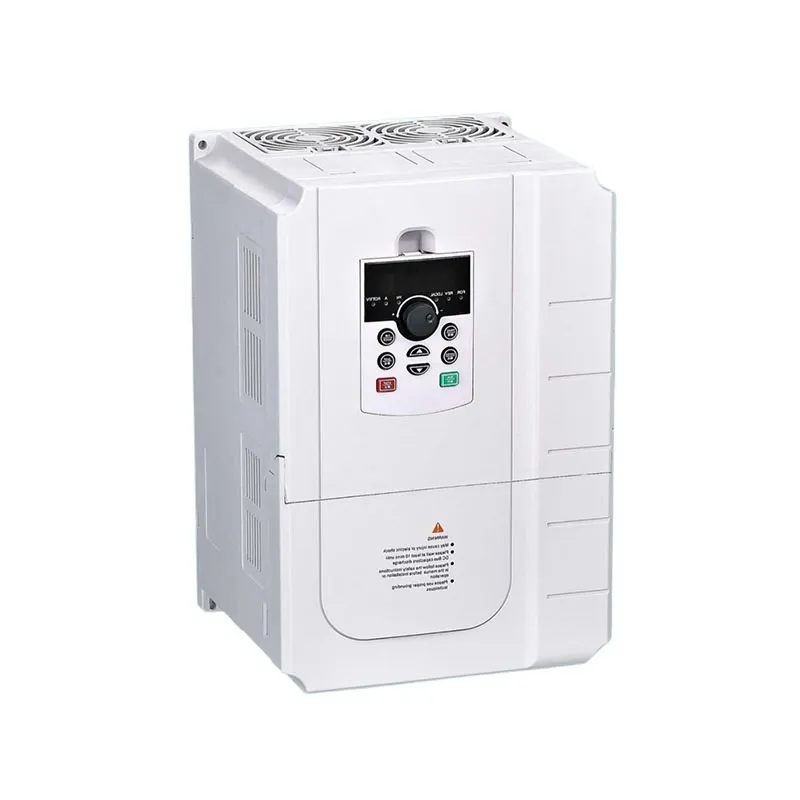
Contact CDADA and let us be your manufacturer as well as supplier of Solar Pump Inverter. This product is 15kW—3-phase, MPPT-integrated, for irrigation & water supply. No grid needed. IP65 optional, dry-run protection, and remote monitoring. Ideal for farms & rural projects.
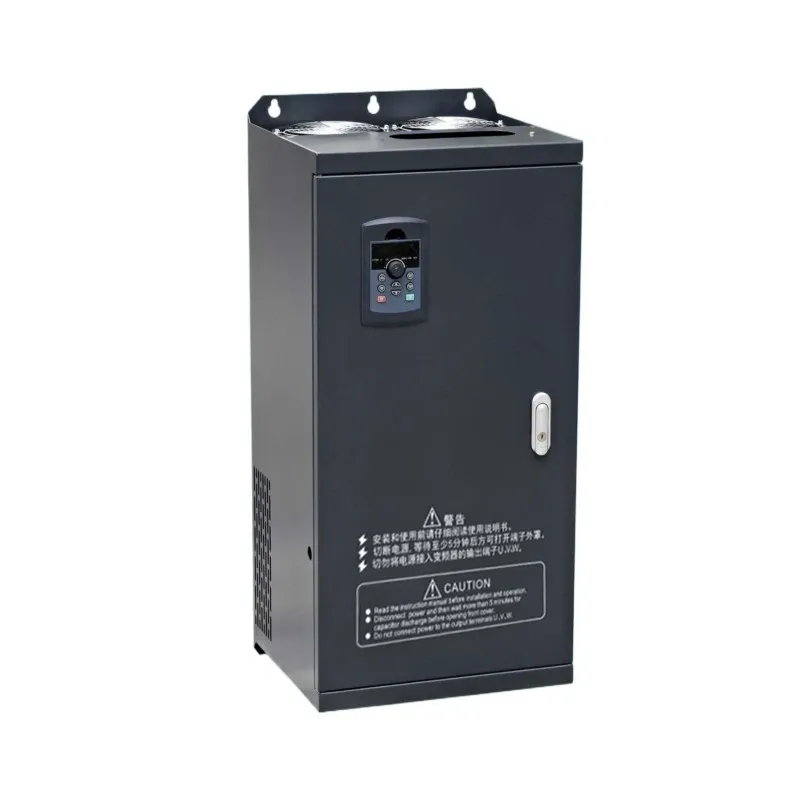
DC Inverter 0.75kW-630kW
As a reliable supplier, CDADA's DC Inverter 0.75kW-630kW is industrial-grade, DSP-based vector control, 4 modes (SVC/VC/V/F/Torque), Modbus, and auto-tuning. For pumps, conveyors, extruders & high-precision drives. To get a factory direct price and OEM solution, you can contact us.
CDADA is a DC Inverter manufacturer and supplier in China. Our factory serves diverse industries such as power systems, building automation, and industrial manufacturing, offering flexible OEM/ODM solutions.