An MCCB with leakage protection combines conventional molded case circuit breaker functions with residual current protection in one coordinated solution. For commercial buildings, industrial facilities, equipment manufacturers and electrical contractors, this can address a common challenge: protecting a power circuit from overloads and short circuits while also detecting potentially dangerous leakage current.
The key is not simply choosing a breaker with more functions. The device must match the system voltage, rated current, short-circuit conditions, pole configuration, leakage-current setting, installation environment and coordination requirements. This guide explains how the technology works, what problems it addresses, and what buyers should verify before specifying an MCCB with leakage protection.

Table of Contents
- 1. What Is an MCCB with Leakage Protection?
- 2. How Does Leakage Protection Work?
- 3. Which Electrical Problems Can It Address?
- 4. Why Combine MCCB and Leakage Protection?
- 5. Where Is an MCCB with Leakage Protection Used?
- 6. What Should Buyers Check Before Selection?
- 7. Key Parameters Explained
- 8. MCCB with Leakage Protection vs. Separate Protection Devices
- 9. Installation and Maintenance Considerations
- 10. Shanghai DaDa Electric Co., Ltd. and Leakage Protection Solutions
- 11. Frequently Asked Questions
- 12. Conclusion
1. What Is an MCCB with Leakage Protection?
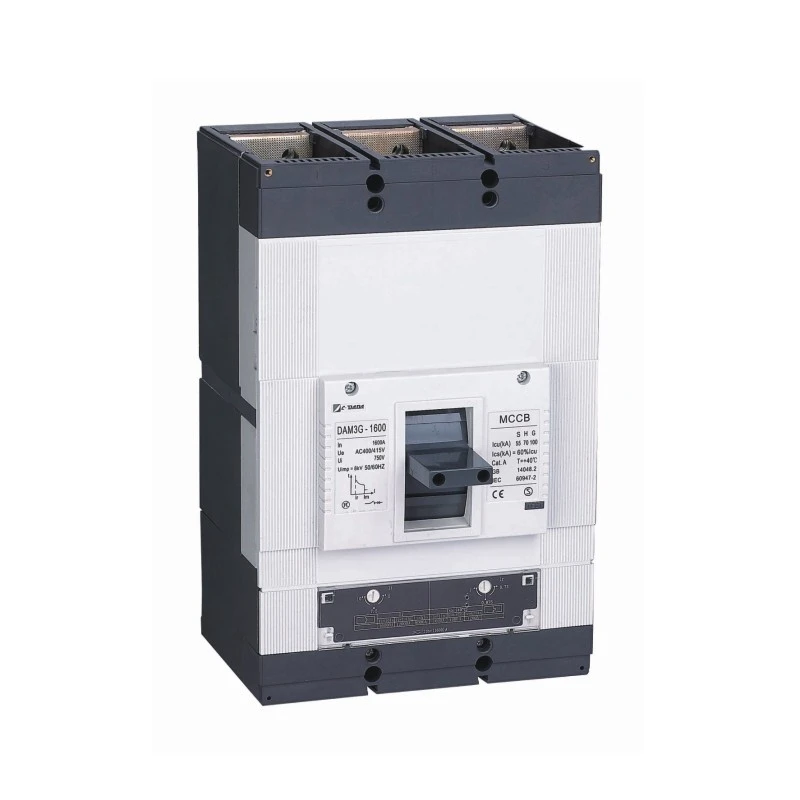
A molded case circuit breaker, commonly called an MCCB, is designed to protect low-voltage electrical circuits against conditions such as overload and short circuit. Unlike a basic protective switch, an MCCB can be selected across a broad range of current ratings and interrupting capacities, making it suitable for commercial and industrial distribution systems.
An MCCB with leakage protection adds residual current or earth leakage detection to these conventional protection functions. When an abnormal leakage current is detected and reaches the configured operating level, the protection mechanism can initiate a trip and disconnect the affected circuit.
This combination is particularly useful when electrical designers want multiple layers of protection without creating an unnecessarily complicated panel arrangement. Commercial products are available as integrated MCCB-plus-residual-current solutions or as MCCBs combined with compatible residual current modules. IEC 60947-2 includes requirements for circuit breakers incorporating residual current protection, while manufacturers may provide different configurations and adjustment ranges.
2. How Does Leakage Protection Work?
In a healthy electrical circuit, the current flowing through the outgoing conductors should correspond appropriately with the current returning through the circuit. A leakage condition occurs when part of the current takes an unintended path, such as through insulation deterioration, connected equipment or a person contacting an energized part.
Leakage protection monitors the residual current associated with this imbalance. If the measured residual current exceeds the device's configured operating threshold, the protection system sends a trip signal to the MCCB mechanism.
Depending on the product design, leakage protection may provide adjustable residual operating current, time delay, test functionality, alarm indication or other monitoring functions. Commercial MCCB leakage-protection products demonstrate that sensitivity and delay settings can vary significantly according to the intended application.
Why Is This Different from Overload Protection?
Overload protection and leakage protection respond to different problems. An overloaded circuit can draw excessive current because too many loads are connected or because equipment is operating beyond its intended capacity. A leakage fault, however, concerns current escaping from its intended conductive path.
Therefore, simply increasing the overload protection capability does not automatically provide suitable leakage protection. The two functions should be considered separately when designing an electrical distribution system.
3. Which Electrical Problems Can It Address?
Electrical equipment used in factories, commercial buildings and infrastructure projects may operate for long periods under demanding conditions. Moisture, dust, insulation aging, mechanical damage, installation errors and equipment deterioration can all contribute to abnormal current paths.
Damaged or aging insulation can create unintended current paths that may not behave like a conventional short circuit.
Residual current protection can help detect leakage conditions that require rapid circuit disconnection.
Combining protection functions can simplify the arrangement compared with using several independent components.
The actual protection level depends on the complete electrical system, device configuration and installation conditions. An MCCB with leakage protection should therefore be treated as one part of a properly engineered protection scheme rather than as a universal solution for every electrical hazard.
4. Why Combine MCCB and Leakage Protection?
For many electrical projects, the main attraction is the ability to address several protection requirements within a coordinated device arrangement. This can be valuable where panel space, installation time and system coordination are important.
1. Multiple Protection Functions
A properly configured device can provide overload, short-circuit and residual-current protection within the same protection architecture. This makes it easier for engineers to establish a defined protection strategy for a feeder or distribution circuit.
2. More Efficient Panel Design
Integrated or closely matched protection components can reduce the need for separate devices, wiring and mounting arrangements. Manufacturers of residual-current-protected MCCBs specifically highlight compact installation and reduced component requirements as practical advantages.
3. Adjustable Protection
Some products provide adjustable residual current thresholds and time delays. This allows the protection arrangement to be adapted to different circuits instead of relying on one fixed setting for every application.
4. Easier System Planning
When overload, short-circuit and leakage requirements are considered together, engineers can evaluate the complete protection strategy instead of selecting individual components independently.
5. Where Is an MCCB with Leakage Protection Used?
The appropriate application depends on the electrical design, local requirements and product specifications. Typical application areas include:
- Commercial building distribution boards
- Industrial power distribution systems
- Factory production equipment
- Motor and machinery feeders
- Workshops and manufacturing facilities
- Infrastructure and utility installations
- Electrical equipment requiring earth leakage monitoring
- Distribution systems where panel space is limited
- Projects requiring coordinated overload, short-circuit and residual-current protection
MCCBs are widely used in industrial and commercial distribution because their current ratings and interrupting capabilities can cover applications beyond the typical range of small branch-circuit breakers.
6. What Should Buyers Check Before Selection?
Selecting an MCCB with leakage protection based only on rated amperage can create problems during installation. Buyers should provide the manufacturer or electrical engineer with sufficient system information before confirming a model.
- Rated current: Determine the expected continuous load and select a suitable current rating based on the complete circuit design.
- Operating voltage: Confirm the system voltage and whether the product is suitable for the intended AC application.
- Number of poles: Check whether the system requires 3P, 4P or another configuration.
- Short-circuit capability: Verify the available prospective fault current and ensure the breaker has an appropriate interrupting rating.
- Leakage sensitivity: Determine the residual operating current required for the intended protection strategy.
- Time delay: Consider whether instantaneous operation or a time-delayed response is required for coordination with upstream or downstream devices.
- Installation conditions: Review ambient temperature, enclosure, humidity, altitude and other relevant environmental factors.
- Standards and certifications: Confirm the standards and approvals required in the target market.
7. Key Parameters Explained
The following parameters are particularly important when comparing different MCCB leakage-protection products.
| Parameter | Why It Matters | What Buyers Should Confirm |
|---|---|---|
| Rated Current (In) | Defines the current level the circuit breaker is designed to carry under specified conditions. | Match the breaker to the circuit load and conductor design. |
| Rated Voltage (Ue) | Defines the electrical operating voltage for the application. | Confirm compatibility with the system voltage. |
| Breaking Capacity | Indicates the fault current the breaker can safely interrupt under specified test conditions. | Compare the product rating with the available short-circuit current. |
| Leakage Current Setting | Determines the residual current level at which the leakage protection operates. | Confirm the required sensitivity and adjustment range. |
| Time Delay | Can help coordinate leakage protection with other protective devices. | Check whether the required response is instantaneous or delayed. |
| Number of Poles | Determines which conductors are switched and protected. | Confirm 3P, 4P or other required configuration. |
| Standards | Provides a framework for product performance and testing. | Verify the applicable IEC, regional and project requirements. |
For example, current commercial products with residual-current protection may offer different combinations of rated current, pole configuration, operating voltage and breaking capacity. These specifications should always be checked against the actual product datasheet rather than assumed from the product category alone.
8. MCCB with Leakage Protection vs. Separate Protection Devices
Both integrated and separate protection arrangements can be technically appropriate. The better configuration depends on the project's electrical architecture, space requirements, coordination strategy and procurement preferences.
| Consideration | MCCB with Leakage Protection | Separate Protection Arrangement |
|---|---|---|
| Panel Layout | Can provide a compact arrangement. | May require additional mounting space. |
| Wiring | Can reduce interconnection between separate protection components. | May require additional wiring and coordination. |
| Protection Functions | Designed around a combined protection arrangement. | Functions can be selected independently. |
| Maintenance | Fewer separate components may simplify inspection. | Individual components can be replaced separately depending on the design. |
| Customization | Depends on available breaker and leakage-protection configurations. | Can offer flexibility by combining different devices. |
The important point is that integration does not automatically mean suitability. The selected combination must still satisfy the electrical requirements of the installation.
9. Installation and Maintenance Considerations
Correct installation is just as important as selecting the correct breaker. Even a well-designed MCCB with leakage protection may not provide the intended performance if the wiring, grounding arrangement, settings or installation environment are incorrect.
Check the Wiring Carefully
Follow the manufacturer's wiring diagram and installation instructions. The phase and neutral conductors, where applicable, must be arranged correctly for the residual current detection system to operate as intended.
Verify the Leakage Setting
Do not assume that the lowest available leakage-current setting is automatically appropriate. The setting should correspond to the intended protection function and the electrical characteristics of the circuit.
Consider Selectivity
Large distribution systems may contain multiple protective devices. Their operating characteristics should be reviewed together so that an appropriate downstream fault does not unnecessarily disconnect a much larger portion of the installation.
Perform Functional Testing
Where the product provides a test function, testing should follow the manufacturer's recommended procedure and the requirements applicable to the installation. Some residual-current devices provide test functions and additional monitoring features.
10. Shanghai DaDa Electric Co., Ltd. and Leakage Protection Solutions
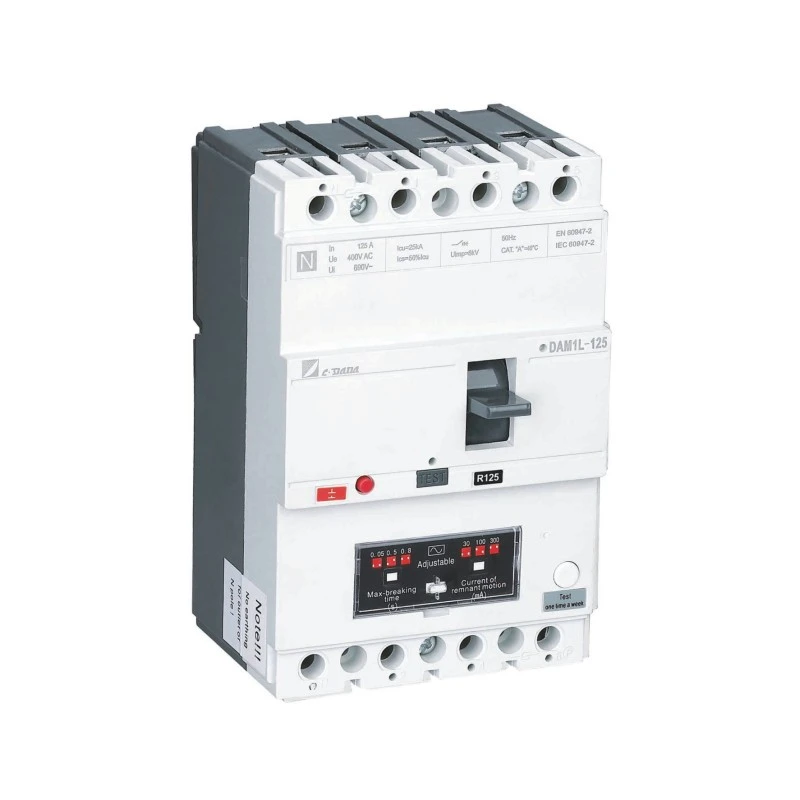
Shanghai DaDa Electric Co., Ltd. provides MCCB solutions designed for applications where conventional circuit protection and leakage protection need to work together. Its DAM1L series is an example of an MCCB with integrated residual current protection, designed for applications including building electrical systems, industrial sites and other low-voltage distribution environments.
The product information indicates configurations such as four-pole construction, a broad rated-current range and adjustable earth-leakage protection. Depending on the model, leakage operating current can be configured across a specified range, allowing the protection strategy to be adapted to different applications.
For overseas buyers, distributors, panel builders and electrical contractors, the most useful approach is to provide the supplier with the project requirements before requesting a quotation. This helps determine whether the required current rating, pole arrangement, leakage setting, breaking capacity and certification are available in the intended configuration.
Information to Include in an Inquiry
- Required rated current
- System voltage and frequency
- Number of poles
- Required leakage-current sensitivity
- Required time-delay function
- Expected short-circuit current or required breaking capacity
- Installation environment
- Target market and certification requirements
- Required quantity
- OEM or customized requirements, if applicable
Providing these details at the beginning can make technical communication more efficient and reduce the risk of selecting a breaker that does not match the final installation.
11. Frequently Asked Questions
Leakage protection detects residual current caused by an unintended current path and can initiate breaker tripping when the configured operating threshold is reached. It addresses a different condition from conventional overload and short-circuit protection.
No. An ordinary MCCB provides functions such as overload and short-circuit protection, while a leakage-protected configuration adds residual-current detection and protection.
Leakage protection can help detect certain abnormal current paths that may contribute to electrical hazards. However, fire prevention depends on the complete electrical installation, equipment condition, protection settings and applicable safety measures.
There is no single setting suitable for every installation. The appropriate value depends on the protection objective, circuit characteristics, equipment and applicable electrical requirements. The setting should be determined by qualified personnel.
An MCCB configuration is normally designed around conventional circuit-breaker protection functions, but the exact protection functions depend on the specific model and trip-unit configuration. Always verify the manufacturer's technical documentation.
IEC 60947-2 is an important standard for low-voltage circuit breakers and includes requirements relevant to circuit breakers incorporating residual current protection. Regional standards and project-specific requirements may also apply.
Yes, suitable models can be used in industrial distribution and equipment applications when their electrical ratings, protection characteristics and environmental specifications match the installation.
Provide the required current, voltage, poles, breaking capacity, leakage-current setting, time-delay requirement, installation conditions, quantity and target certification. This gives the manufacturer enough information to recommend an appropriate configuration.
12. Conclusion
An MCCB with leakage protection addresses two important areas of electrical protection: conventional overcurrent protection and detection of residual current. By bringing these functions into a coordinated solution, it can help simplify power distribution designs where electrical safety, panel space and system coordination are important.
The most important step is to look beyond the product name. Rated current, operating voltage, breaking capacity, pole configuration, leakage sensitivity, time delay, installation conditions and applicable standards all influence whether a particular MCCB is appropriate for a project.
For buyers evaluating leakage-protected MCCBs for commercial buildings, industrial facilities, distribution panels or OEM applications, working directly from the actual electrical requirements is the most reliable way to identify a suitable configuration.
Need an MCCB with Leakage Protection?
If you are sourcing MCCBs for a new electrical project, replacing existing protection devices or developing a customized distribution solution, Shanghai DaDa Electric Co., Ltd. can help you review the required specifications and product configuration. Share your voltage, current, pole number, leakage-protection requirements and application details to discuss the appropriate solution.
For product specifications, OEM requirements or project inquiries, contact us with your electrical requirements and application information.