Why Is DC Circuit Protection Becoming Critical for the Future of Power Systems?
The global power industry is becoming increasingly dependent on direct current. Solar photovoltaic arrays, battery energy storage systems, electric vehicle charging stations, telecommunications equipment, and data centers all contain important DC sections. As these applications expand, circuit protection is moving from a supporting component to a central part of system safety. A DC circuit breaker must disconnect abnormal current quickly and safely, limiting damage to cables, converters, batteries, and connected equipment.
Interrupting DC is technically different from interrupting AC. In an AC circuit, current naturally crosses zero many times per second, which helps extinguish an electrical arc. DC has no natural zero crossing, so an arc can remain stable after contacts separate. Breakers designed for DC therefore require suitable contact structures, arc chutes, magnetic blowout arrangements, insulation distances, and wiring configurations. An AC breaker should never be assumed suitable for DC service merely because its current rating appears adequate.
One clear industry trend is the move toward higher system voltages and greater power density. Higher DC voltage can reduce current for the same transmitted power, helping lower conductor losses and cable requirements. However, it also makes insulation coordination and arc interruption more demanding. Product selection must consider rated operational voltage, rated current, number of poles, short-circuit breaking capacity, utilization environment, and the manufacturer’s specified connection method. Polarity requirements are especially important for some DC breaker designs.
Another trend is closer coordination between breakers and electronic monitoring. Modern energy systems increasingly use sensors, controllers, and communication networks to identify overheating, overloads, insulation faults, and abnormal operating patterns. Mechanical protection remains essential, but it is becoming part of a wider protection architecture that may include fuses, surge protective devices, contactors, insulation monitoring devices, and battery management systems. Selectivity between upstream and downstream devices is also receiving more attention because an unnecessary shutdown can affect an entire solar string, storage rack, charging cabinet, or industrial process.
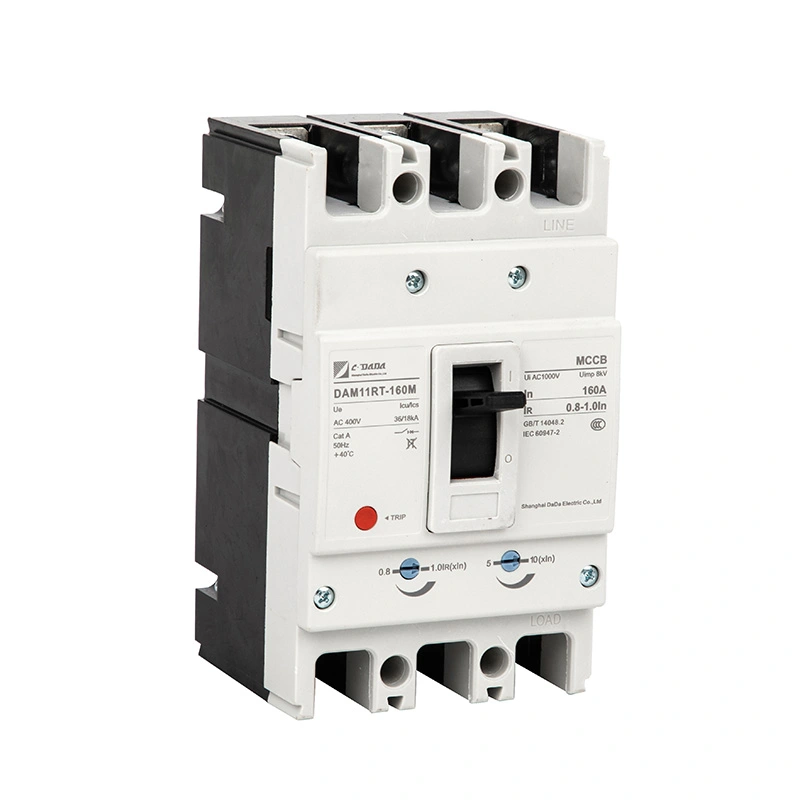
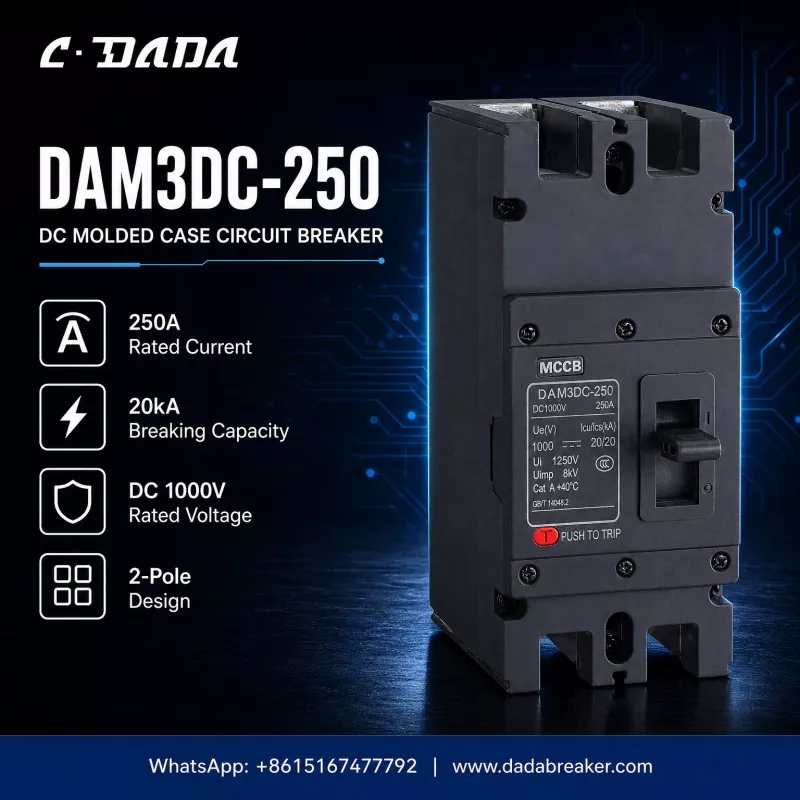
The DAM3DC-250 shown by Shanghai Dada Electric illustrates the type of molded-case DC breaker used in higher-current distribution. The visible specifications indicate a rated current of 250 A, a DC rated voltage of 1000 V, a breaking capacity of 20 kA, and a two-pole design. These values describe its intended electrical range; they do not by themselves determine suitability for every installation. Engineers must still verify the actual short-circuit level, conductor size, ambient temperature, enclosure conditions, load characteristics, installation altitude, applicable standards, and required protection coordination.
For end users, clear labeling and documentation are equally valuable, because correct installation, maintenance, and replacement decisions depend on knowing the device’s verified ratings and limitations in service.
Looking ahead, buyers will place greater emphasis on application-specific validation rather than selecting devices by current rating alone. Reliable DC protection depends on correct voltage matching, adequate interruption capability, proper pole configuration, controlled installation, and periodic inspection. As renewable generation, storage, and electrified transport continue to develop, understanding these fundamentals will help system designers reduce risk and build more dependable DC networks.
Related News
- What Is a Type A Residual Current Circuit Breaker and How Does It Protect Electrical Systems?
- What Makes an MCCB with Leakage Protection Important for Safer Power Distribution?
- What Makes a 125 15KA Miniature Circuit Breaker Suitable for High-Current Protection?
- How Does a 6kA AC Miniature Circuit Breaker Improve Circuit Protection?
- A Practical Guide to Residual Current Circuit Breakers with Over current Protection
- A Practical Guide to Molded Case Circuit Breakers
Leave me a message