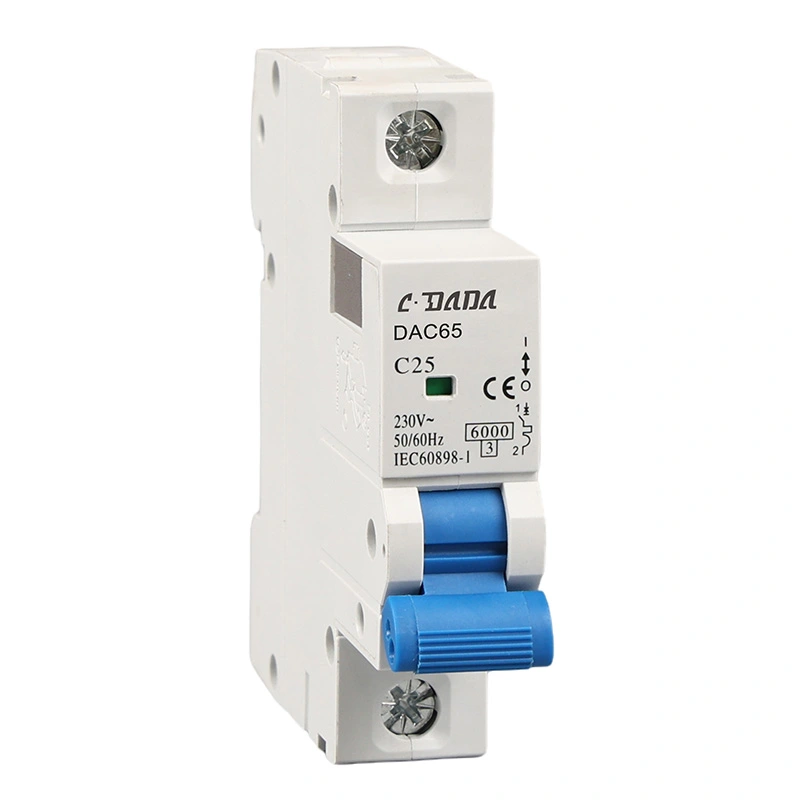
Hannover Messe 2026: Can Smart Factories Move Forward Without Reliable Motor Protection like LRD Relays?
Hannover Messe 2026 Recap: AI, Robotics, and the Unsung Hero of Every Production Line.
The 2026 edition of Hannover Messe has officially concluded, and the verdict is clear: the industrial world has entered a new era. With over 4,000 exhibiting companies and a sharp focus on AI-driven autonomy and supply chain decarbonization, this year‘s fair was less about future-gazing and more about deployment at scale. Industrial AI is no longer a demonstration concept tucked away in an innovation corner — it has moved directly into the production floor, embedding itself into core workflows.
From Siemens’ fully autonomous packaging lines featuring humanoid-robot collaboration to SAP‘s AI agents that independently diagnose equipment faults and schedule maintenance crews, the message from Hannover was unambiguous: factories are becoming self-monitoring, self-optimizing systems. Yet amid the fanfare of generative AI assistants, digital ecosystems like RoX, and industrial-grade 5G connectivity, a quieter but equally critical story unfolded on the exhibition floor.
Every robot arm, every conveyor belt, every motor-driven actuator — regardless of how “smart” the overarching control system may be — relies on one fundamental thing: a motor that does not burn out.
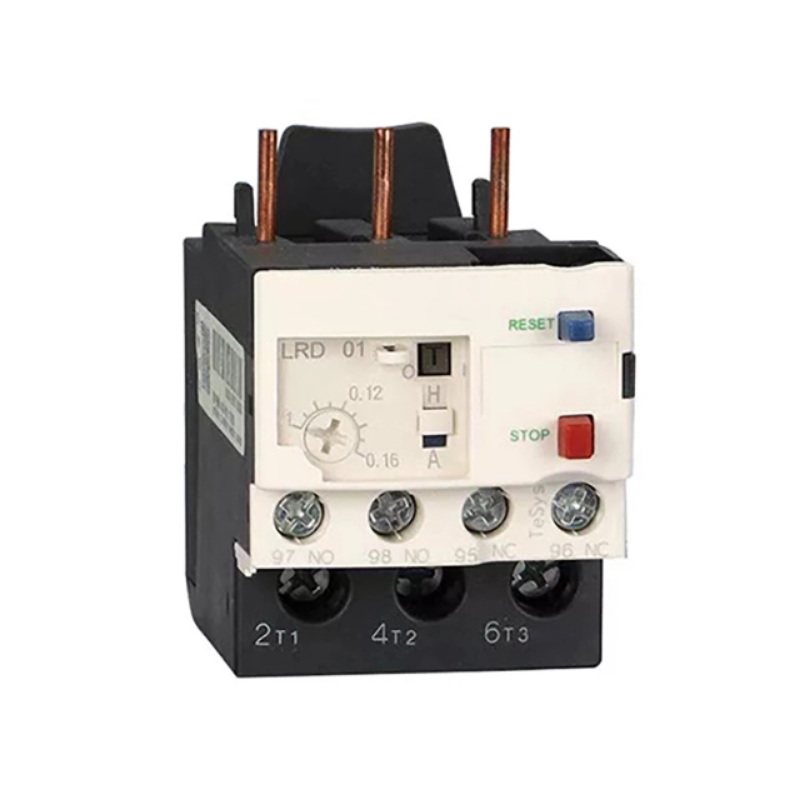
This brings us to a critical question that peolple are increasingly asking: can smart factories truly move forward without reliable motor protection? Specifically, without workhorse components like the LRD Thermal Overload Relay?
Why Motor Protection Still Defines Uptime in the Age of Industry 4.0?
Global data confirms what Hannover‘s demonstrations suggest. The global motor protection market reached USD 5.42 billion in 2024 and is projected to climb to USD 7.78 billion by 2030, growing at a steady CAGR of 6.06%. Within this broader landscape, the Electric LRD Overload Relay market alone grew from USD 771.21 million in 2025 to USD 832.23 million in 2026, and is expected to reach USD 1.21 billion by 2032 at a CAGR of 6.70%.
What these figures reflect is not merely replacement demand. They represent a fundamental shift in how industry views overload protection. Electric LRD overload relays are evolving from basic motor protection components into reliability enablers amid electrification and tighter uptime goals. Across industrial sites, buyers are increasingly evaluating these devices not as standalone protective accessories, but as part of an integrated motor-branch-circuit strategy — one that encompasses contactor compatibility, short-circuit coordination, enclosure planning, and where applicable, monitoring interfaces.
Hannover Messe 2026 made this logic tangible. The exhibition‘s “Automation & Digitalization” category ranked among the top three areas of visitor interest, right after Industry 4.0 and Artificial Intelligence — proof that digital ambition and physical reliability are two sides of the same industrial coin.
A Proven Partnership: LRD Relays, Contactors, and the Complete Motor Starter.
A motor protection strategy is only as strong as the components that execute it. At the heart of countless motor starter panels worldwide, the combination of an AC contactor and a LRD Thermal Overload Relay remains the industry’s most widely deployed, tested, and trusted architecture.
The reason is both technical and economic. When an LRD Thermal Overload Relay is directly mounted beneath its companion contactor — either plugged in or screwed on — the pair forms a compact, mechanically integrated starter. This design eliminates loose wiring between the contactor and the relay, reduces assembly time on the panel builder‘s bench, and creates a unified protective device that responds predictably to overloads, phase loss, and prolonged starting conditions.
Crucially, this direct-mount architecture means that the LRD Thermal Overload Relay does not require an additional enclosure, an external communication bus, or a software configuration tool to perform its primary protective function. For thousands of industrial end users — from pump stations and compressor houses to packaging lines and HVAC installations — that simplicity translates into faster commissioning, fewer points of failure, and straightforward troubleshooting in the field.
One of the defining advantages of a properly matched contactor-relay pair is consistent tripping behavior across all three phases. Because the LRD Thermal Overload Relay is mechanically linked to the contactor’s main poles, the thermal sensing elements experience the same ambient conditions and current path heating as the contactor itself. This physical coherence reduces nuisance tripping on hot days and prevents under-protection during cold starts, both of which are chronic headaches in facilities without climate-controlled electrical rooms.
For panel builders and OEMs, the interoperability of LRD-type relays with standard IEC contactor families also simplifies the bill of materials. A single relay model can serve multiple motor ratings simply by adjusting the setting dial, which means fewer stock-keeping units to manage and less confusion during assembly. This kind of operational efficiency — invisible to the end customer but vital to the manufacturer — is a quiet but significant reason why the direct-mount contactor-LRD combination endures in industrial practice.
CDADA LRD Thermal Overload Relays: A Professional Alternative with Supply-Chain Resilience.
For procurement professionals tasked with balancing performance, compliance, and cost, brand choice matters. CDADA, a manufacturer with roots dating back to 1983 in Zhejiang province and formally headquartered in Shanghai since 2004, has systematically built a low-voltage protection portfolio that now delivers over 3 million circuit breakers annually across a 52,400 m² production footprint.
CDADA‘s approach to the LRD Thermal Overload Relay follows a clear design philosophy: deliver the protections that industrial users genuinely need — overload protection, phase-failure sensitivity, temperature compensation, and manual/automatic reset — while maintaining full compatibility with standard IEC contactor interfaces.
What truly distinguishes CDADA’s LRD Thermal Overload Relay is its differential mechanism, which provides genuine phase-loss sensitivity. In a three-phase motor, if one phase drops out while the motor continues running on the remaining two, winding currents become severely unbalanced. A non-differential bimetal relay may not detect this condition quickly enough to prevent insulation damage. CDADA‘s differential design ensures that the relay trips even when only two phases carry current, protecting the motor from single-phasing damage.
Procurement Perspective: Why Thermal Protection Still Matters in the Digital Era?
A recurring theme at Hannover Messe 2026 — and in boardroom discussions across the industrial sector — is the reality that Industry 4.0 technology may be largely ready, but most manufacturers are not. The gap between digital aspiration and shop-floor reality remains wide. In this context, pragmatic procurement decisions that prioritize reliability, availability, and ease of integration carry enormous weight.
Several factors are converging to keep thermal overload relays — particularly the LRD form factor — relevant and in growing demand:
- Supply-chain resilience: post-pandemic lead-time volatility has prompted organizations to dual-source critical protection components and broaden their qualification lists. A supplier like CDADA, with an annual output exceeding three million circuit breakers and a vertically integrated factory footprint, addresses this procurement concern directly.
- Cost-sensitive markets: while smart electronic motor protectors with IoT connectivity offer advanced features, the upfront investment remains prohibitive for many small and medium enterprises, particularly across Asia, Africa, and Latin America. The LRD Thermal Overload Relay — thermally accurate, mechanically robust, and competitively priced — remains the practical choice for these high-volume markets.
- Interoperability requirements: LRD-type relays from CDADA are mechanically and electrically compatible with standard IEC contactor footprints. This means no proprietary tooling, no locked-in ecosystem, and no retraining of panel-shop staff. Interoperability, not exclusivity, drives adoption at scale.
LRD vs. Electronic Overload Relays: A Side-by-Side Practical Comparison
| Selection Criteria | CDADA LRD Thermal Overload Relay | Electronic Overload Relay |
|---|---|---|
| Protection Principle | Differential bimetal strip (thermal) | Microprocessor-based current sensing |
| Phase-Failure Protection | Built-in (mechanical differential) | Built-in (electronic detection) |
| Accuracy | Good (± 10–15% of setting) | High (± 2–5% of setting) |
| Ambient Temperature Sensitivity | Compensated (-5 °C to +55 °C) | Largely unaffected |
| Auxiliary Power Required | No | Yes (typically 24 V DC or 110–240 V AC) |
| Communication / IoT | No | Yes (Modbus, Profibus, etc.) |
| Installation Complexity | Very low (plug-in, tool-free) | Medium (wiring for power supply and comms) |
| Relative Cost | Low | Medium to High |
| Typical Tripping Class | Class 10A | Selectable (Class 5E to Class 30E) |
| Best Suited For | General industrial motor starters, pump panels, compressor control, HVAC, OEM machinery | Critical process motors, remote-monitored assets, energy-audit applications |
This comparison is not about declaring one technology “better” than the other. It is about fit-for-purpose specification. For the vast majority of industrial motor starters — where the motor is not process-critical, where the environment is electrically clean, and where the maintenance budget favors simplicity — the CDADA LRD Thermal Overload Relay continues to deliver the best balance of protection, cost, and reliability. Electronic relays have their place in high-value or remotely monitored assets, but they are not yet the universal default — nor are they likely to become one in the decade ahead.
Frequently Asked Questions (FAQ)
Q1: Does an LRD relay really protect against phase loss?
Yes. The differential bimetal mechanism detects when one phase drops out. It trips at about 1.3× current on the remaining two phases — no external power needed.
Q2: Thermal or electronic — which one should I pick?
Choose thermal (LRD) if: budget is tight, you have many standard motors, or maintenance is basic.
Choose electronic if: the motor is critical, you need remote monitoring, or you have trained staff.
For 80% of industrial motors, thermal is still the right answer.
Q3: How do I size an LRD relay correctly?
Read the full-load current (FLA) from the motor nameplate.
If the motor has a service factor (>1.0), multiply FLA by SF.
Pick an LRD model whose adjustment range covers that value, then set the dial.
Q4: What certifications should I look for?
At minimum: IEC 60947-4-1 (product standard) and CE. For global trade, also CB, KEMA, or CCC. CDADA holds these certifications.
Conclusion: The Foundation of Smart Manufacturing Is Still Physical
Hannover Messe 2026 demonstrated that AI-driven automation, humanoid robots, and digital data ecosystems are reshaping what is possible on the factory floor. But these advances do not eliminate the physical fundamentals. Every robotic cell, every automated conveyor, every smart pumping station still depends on electric motors — and every motor still needs dependable overload protection.
The LRD Thermal Overload Relay, in its understated but essential role, connects two realities: the grand ambition of Industry 4.0 and the gritty, practical need for motors that run reliably shift after shift, year after year. Manufacturers like CDADA, with over four decades of domain expertise, multiple international certifications, and the production capacity to supply components globally, ensure that this connection remains strong.
Related News
- A Practical Guide to Residual Current Circuit Breakers with Over current Protection
- Why Is DC Circuit Protection Becoming Critical for the Future of Power Systems?
- A Practical Guide to Molded Case Circuit Breakers
- Why Does Miniature Circuit Breaker DPN 6KA Matter for Modern Electrical Protection?
- Why Is Miniature Circuit Breaker REAL 6KA Essential for Reliable Electrical Protection?
- What Makes a Compact Moulded Case Circuit Breaker Essential for Modern Electrical Protection?
Leave me a message