Reliable MCCB Accessories Factory
In addition to our comprehensive range of Moulded Case Circuit Breakers (MCCBs), CDADA also offers a full selection of associated MCCB accessories. Both internal and external accessories are available; please contact us if you require assistance with product selection or technical support.
What Are MCCB Accessories?
MCCB accessories are supplementary devices designed to enhance the functionality, protection, and control capabilities of Molded Case Circuit Breakers (MCCBs). These accessories transform a basic circuit breaker into an intelligent, integrated component of modern electrical distribution and control systems. Operating under IEC 60947-2 (circuit-breakers) and IEC 60947-4-1 (contactors and motor starters), MCCB accessories enable remote operation, status monitoring, safety interlocking, and seamless integration with building management and industrial automation systems.
MCCB accessories fall into two primary categories:
Internal Accessories: Mounted inside the breaker cavity (shunt trips, undervoltage releases, auxiliary contacts, alarm contacts)
External Accessories: Mounted on the breaker exterior or enclosure (rotary handles, door interlocks, terminal covers, extended shafts)
The global MCCB accessory market is experiencing significant growth driven by smart grid adoption, industrial automation, and renewable energy integration, with manufacturers like Schneider Electric, ABB, Eaton, and Chint offering comprehensive accessory portfolios compatible across their MCCB ranges .
MCCB Accessory Product Categories & Configurations
|
Category |
Accessory Type |
Function |
Technical Specifications |
|
Remote Operation |
Shunt Trip (MX) |
Remote tripping via external voltage signal |
AC: 24V, 48V, 110V, 230V, 400V; DC: 12V, 24V, 48V, 110V; Inrush 200VA (AC)/200W (DC), Sealed 20VA (AC)/20W (DC); Trip time <50ms |
|
Undervoltage Release (MN/UVR) |
Automatic tripping when voltage drops below threshold |
Pickup: 0.85×Un; Dropout: 0.35-0.7×Un; Time delay: 0.1s-3s (adjustable); Continuous duty |
|
|
Motor Operator (MO) |
Electric charging and operation of breaker mechanism |
AC/DC supply, 3-5s operating time, manual override, position feedback |
|
|
Status Signaling |
Auxiliary Contacts (AX) |
Indicate breaker position (ON/OFF) |
1NO+1NC or 2NO+2NC, 10A at 230V AC, silver alloy contacts, snap-action |
|
Alarm Contacts (AL) |
Signal breaker tripped due to fault |
1NO+1NC, operates only on trip (not manual OFF), distinct from auxiliary |
|
|
Fault Signal Contacts |
Indicate specific fault types (overload, short-circuit, ground fault) |
Microswitch-based, integrated with electronic trip units |
|
|
Safety & Interlocking |
Rotary Handle |
External operation through door/panel |
Direct or extended, padlockable, IP65, door interlock |
|
Door Interlock |
Prevent door opening when breaker ON |
Mechanical linkage, defeatable for emergency access |
|
|
Key Lock |
Restrict operation to authorized personnel |
Multiple lock types (Ronis, Profalux), key removable in ON or OFF |
|
|
Mechanical Interlock |
Prevent simultaneous closure of two breakers |
Cable or rod type, for changeover applications |
|
|
Protection & Monitoring |
Terminal Covers |
Prevent accidental contact with live parts |
IP20 to IP40, phase barriers, extended for busbar connection |
|
Phase Barriers |
Increase clearance between phases |
Insulating material, 400-690V rated, modular design |
|
|
Surge Protection Device (SPD) |
Protect breaker from lightning surges |
Type 1+II, 12.5-15kA impulse current, integrated mounting |
|
|
Communication & Smart |
Wireless Auxiliary Contact |
Remote status monitoring via Bluetooth/WiFi |
Tuya App compatible, 45mm width, battery or self-powered |
|
Modbus Communication Module |
Integration with BMS/SCADA systems |
RS485 interface, real-time data, remote control capability |
|
|
PowerTag Energy Sensor |
Wireless energy monitoring |
1% accuracy, 15-minute data, cloud connectivity |
Accessory Compatibility Matrix (Typical):
|
MCCB Frame Size |
Shunt Trip |
UVR |
Auxiliary |
Motor Operator |
Rotary Handle |
|
100A-250A |
Internal |
Internal |
Internal/External |
External |
External |
|
250A-630A |
Internal |
Internal |
Internal/External |
Internal/External |
External |
|
630A-1600A |
Internal |
Internal |
Internal |
Internal |
External/Extended |
|
1600A-2000A |
External |
External |
External |
External |
Extended/Heavy-duty |
Core Functions & Operating Principle
Shunt Trip (MX) - Remote Tripping Mechanism
|
Component |
Function |
Technical Details |
|
Electromagnetic Coil |
Generates magnetic field when energized |
AC: Inrush 200VA, sealed 20VA; DC: Inrush 200W, sealed 20W; Insulation Class F (155°C) |
|
Plunger Mechanism |
Strikes trip bar to release mechanism |
Hardened steel, spring-return, stroke 5-10mm |
|
Contact System |
Isolated from main breaker circuits |
Reinforced insulation, 4kV impulse withstand |
|
Mounting |
Snap-fit or screw-mounted in breaker cavity |
Tool-free installation on most modern MCCBs |
Operating Sequence:
Control voltage applied to shunt trip terminals (typically 110-240V AC or 24V DC)
Coil energizes, generating magnetic field
Plunger strikes breaker trip bar with 2-5N force
Mechanism releases, main contacts open
Plunger returns via spring when voltage removed
Breaker requires manual reset (reclosing)
Applications:
Emergency stop systems (E-stop buttons)
Fire alarm system integration (automatic shutdown)
Remote load shedding (demand response)
Generator transfer schemes (synchronized opening)
Undervoltage Release (MN/UVR) - Voltage Monitoring
|
Parameter |
Specification |
Safety Function |
|
Pickup Voltage |
0.85 × Un (breaker can be closed) |
Prevents closure on low voltage |
|
Dropout Voltage |
0.35-0.7 × Un (adjustable) |
Automatic trip on undervoltage |
|
Time Delay |
0.1s-3s (electronic types) |
Prevents nuisance tripping from voltage dips |
|
Continuous Duty |
100% rated voltage |
Coil energized continuously during normal operation |
Operating Principle: The UVR coil is continuously energized during normal operation, holding a mechanical latch closed. When voltage drops below the threshold for the set time delay, the latch releases and the breaker trips automatically. This prevents:
Motor damage from low-voltage starting (high current, overheating)
Uncontrolled restart after power restoration (safety hazard)
Equipment operation under unsafe voltage conditions
Auxiliary & Alarm Contacts - Status Signaling
|
Contact Type |
Operation |
Application |
|
Auxiliary Contact (AX) |
Changes state with breaker main contacts |
Status indication (ON/OFF), interlocking, control circuits |
|
Alarm Contact (AL) |
Operates only on automatic trip (overload/short-circuit) |
Fault indication, alarm panels, maintenance alerts |
|
Short-circuit Alarm |
Specific to magnetic trip operation |
Selective fault indication |
|
Overload Alarm |
Specific to thermal trip operation |
Preventive maintenance trigger |
Contact Ratings (Typical):
AC-15: 10A at 230V AC (inductive loads)
DC-13: 2A at 110V DC (inductive loads)
Minimum Load: 10mA at 5V (PLC compatibility)
Mechanical Life: 10,000-100,000 operations
Electrical Life: 5,000-50,000 operations (at rated load)
Application Environments & Use Cases
|
Application |
Accessory Configuration |
Technical Requirements |
Integration |
|
Industrial Automation |
Shunt trip + 2×Auxiliary + Motor operator |
24V DC control, fast operation (<50ms), position feedback |
PLC/DCS integration, remote HMI control |
|
Commercial Buildings |
UVR + Auxiliary + Rotary handle |
230V AC, door interlock, padlockable |
BMS integration, fire alarm interface |
|
Data Centers |
Shunt trip + Alarm + Communication module |
48V DC, redundant signaling, Modbus/BACnet |
DCIM software, automated load shedding |
|
Healthcare Facilities |
UVR + 2×Auxiliary + Key lock |
Medical-grade, high reliability, restricted access |
Essential power management, isolation panels |
|
Renewable Energy |
Shunt trip + Surge protection + Wireless |
1000V DC capability, outdoor rating, remote monitoring |
Solar SCADA, energy management systems |
|
Oil & Gas |
Explosion-proof accessories + UVR + Shunt |
ATEX/IECEx certified, corrosion-resistant, tropicalized |
Emergency shutdown systems (ESD) |
|
Marine/Offshore |
Tropicalized UVR + Mechanical interlock |
55°C ambient, salt spray resistant, redundant |
Ship automation, generator synchronization |
|
Infrastructure |
Motor operator + Extended rotary + Position switch |
400V AC, heavy-duty, 50,000 cycle life |
SCADA systems, remote control centers |
Smart Building Integration Example: Modern MCCB accessories enable comprehensive energy management:
PowerTag wireless sensors monitor current, voltage, power factor per breaker
Wireless auxiliary contacts transmit breaker status to central system
Shunt trips enable automated load shedding during peak demand
Modbus modules integrate with building automation for predictive maintenance
Manufacturing Process & Production Workflow
Precision Manufacturing Sequence
Raw Material IQC → Electromagnetic Coil Winding → Plunger/Armature Machining → Contact System Fabrication → Housing Injection Molding → Sub-Assembly → Calibration & Testing → Final Integration → Packaging
Critical Manufacturing Stages
|
Stage |
Process Details |
Quality Control Points |
|
Coil Winding |
Enameled copper wire (0.1-0.5mm), automated winding with tension control, vacuum varnish impregnation |
Turns count ±1%, DC resistance ±5%, dielectric strength 2kV/1min, insulation resistance >100MΩ |
|
Plunger/Armature Machining |
Cold-rolled steel or iron powder metallurgy, precision grinding, hardening (HRC 45-55), surface treatment |
Dimensional tolerance ±0.02mm, surface finish Ra 0.8, magnetic permeability >5000 |
|
Contact Fabrication |
Silver-nickel (AgNi 90/10) or silver-cadmium oxide (AgCdO), stamping, riveting or welding to copper carriers |
Hardness HV 80-120, contact resistance <50mΩ, brazing strength >50MPa |
|
Housing Molding |
PA66 GF30 or PBT GF30, 280-320°C injection, 17.5mm modularity for DIN rail compatibility |
Dimensional tolerance ±0.1mm, tracking index >600V, UL 94 V-0 |
|
Spring Manufacturing |
Oil-tempered carbon steel SWOSC-V or stainless steel 301, CNC coiling, heat treatment |
Fatigue life >100,000 cycles, spring rate ±10%, relaxation <5% |
|
Sub-Assembly |
Coil-plunger-contact integration, stroke adjustment, snap-fit mechanism testing |
Operating voltage 0.85-1.1×Un, trip force 2-5N, response time <50ms |
|
Final Calibration |
Pickup/dropout voltage verification (UVR), operating time measurement (shunt trip), contact resistance |
100% automated testing, data logging, traceability QR coding |
Primary Raw Materials & Component Specifications
|
Component |
Material Specification |
Supplier Standards |
Key Properties |
|
Coil Wire |
Enameled copper wire Class F (155°C) or Class H (180°C) |
IEC 60317, NEMA MW 35 |
Breakdown voltage >2kV, solderability 390°C/2s, flexibility |
|
Magnetic Core |
Silicon steel laminations (0.35-0.5mm) or solid iron |
IEC 60404-8, JIS C 2552 |
High permeability, low coercivity, consistent magnetic properties |
|
Plunger/Armature |
Cold-rolled steel SPCC or iron powder (Fe-99%) |
JIS G 3141, MPIF Standard 35 |
HRC 45-55, surface finish Ra 0.8, corrosion resistance |
|
Contacts |
Silver-nickel (AgNi 90/10) or AgCdO |
ASTM B152, IEC 60368 |
Conductivity >90% IACS, arc erosion resistance, anti-welding |
|
Contact Springs |
Beryllium copper (CuBe2 C17200) or stainless steel 301 |
ASTM B196 |
Fatigue life >100,000 cycles, consistent pressure, corrosion resistance |
|
Housing |
PA66 GF30 or PBT GF30, flame retardant |
IEC 60664-1, UL 94 V-0 |
Tracking index >600V, heat resistance 160°C, impact strength >7 kJ/m² |
|
Terminals |
Brass C36000 or copper C11000 with tin plating |
ASTM B16/B187 |
Current density 1.0-1.5 A/mm², torque withstand 1.5-2.5Nm |
|
DIN Rail Clip |
Spring steel 65Mn or stainless steel 304 |
GB/T 1222, ISO 3506 |
Clamp force 50-100N, 10,000 cycle fatigue, corrosion resistance |
Standards Compliance & Testing Protocols
International Standards Framework
|
Standard |
Scope |
Applicable Requirements |
|
IEC 60947-2 |
Low-voltage switchgear - Circuit-breakers |
Accessory compatibility, coordination with breaker, short-circuit withstand |
|
IEC 60947-4-1 |
Contactors and motor starters |
Motor operator performance, control circuit requirements |
|
IEC 60947-5-1 |
Control circuit devices and switching elements |
Auxiliary contact ratings, electrical endurance, terminal markings |
|
RoHS/REACH |
Environmental compliance |
Hazardous substance restrictions, material declarations |
Mandatory Type Tests (IEC 60947-2 / IEC 60947-5-1)
|
Test Category |
Specific Test |
Acceptance Criteria |
|
Electrical Endurance |
10,000 operations at rated current (AC-15/DC-13) |
Contact wear <50%, no welding, consistent operation |
|
Mechanical Endurance |
100,000 no-load operations |
<5% parameter drift, no mechanical failure |
|
Dielectric Properties |
2kV AC/1min (control circuits), 4kV impulse |
No breakdown, no flashover |
|
Temperature Rise |
Continuous operation at rated voltage/current |
Coil ≤85K (Class F), terminals ≤80K |
|
Shock & Vibration |
IEC 60068-2-27 (shock), IEC 60068-2-6 (vibration) |
No false operation, no damage, functional after test |
|
Environmental |
Damp heat (IEC 60068-2-30), cold, dry heat |
Functional after conditioning, no corrosion |
|
EMC |
Immunity to conducted/radiated interference |
No nuisance operation, EN 60947-2 Annex F |
Factory Quality Control & Inspection Standards
Incoming Material QC (IQC)
|
Material |
Inspection Items |
Sampling Plan |
Equipment |
|
Enameled wire |
Diameter, breakdown voltage, elongation, solderability |
AQL 0.65 |
Micrometer, dielectric tester, tensile machine |
|
Magnetic steel |
Permeability, core loss, insulation coating |
Per batch |
Epstein frame, single sheet tester |
|
Silver contacts |
Purity, hardness, density, dimensional tolerance |
Per batch |
Spectrometer, hardness tester, CMM |
|
Plastic granules |
Glass content, viscosity, moisture, flammability |
Per batch |
Melt flow indexer, DSC, UL 94 apparatus |
|
Spring steel |
Tensile strength, fatigue resistance, forming |
Per batch |
Tensile machine, fatigue tester |
In-Process Quality Control (IPQC)
|
Station |
Control Parameters |
Frequency |
Method |
|
Coil winding |
Turns count, tension, resistance, insulation |
Every unit |
Automated winding with feedback, ohmmeter |
|
Plunger machining |
Dimensional tolerance, surface finish, hardness |
Every 100 units |
CMM, profilometer, hardness tester |
|
Contact assembly |
Alignment, pressure, resistance, brazing quality |
Every 100 units |
Force gauge, micro-ohmmeter, XRF |
|
Housing molding |
Temperature, pressure, dimensional accuracy |
Every cycle |
SCADA monitoring, SPC charts |
|
Sub-assembly |
Operating voltage, stroke, response time |
Every unit |
Automated test bench, data logging |
Final Quality Control (FQC) & Outgoing QC (OQC)
|
Test Item |
Standard |
Sample Size |
|
Operating voltage range |
0.85-1.1×Un (pickup), >0.2×Un (dropout for UVR) |
100% |
|
Response time (shunt trip) |
<50ms at rated voltage |
100% |
|
Contact resistance |
<50mΩ (auxiliary), <100mΩ (alarm) |
100% |
|
Dielectric withstand voltage |
2kV AC/1min |
100% |
|
Insulation resistance |
>100MΩ @ 500V DC |
100% |
|
Mechanical operation |
10 cycles, smooth, no sticking |
100% |
|
Snap-fit compatibility |
Mating with designated MCCB frame |
100% |
|
Visual & dimensional inspection |
Marking permanence, modularity |
100% |
|
Electrical endurance sampling |
1,000 operations at rated load |
AQL 1.0 |
|
Packaging integrity |
Drop test, vibration (ISTA 3A) |
Per lot |
Production Infrastructure & Manufacturing Capability
Advanced Production Equipment
|
Equipment Category |
Machine Specification |
Function |
Capacity |
|
Coil Winding |
CNC winding machines (Nittoku/Marsilli) with tension control |
Precision coil production |
20,000 coils/day |
|
Stamping & Forming |
60-ton progressive die press (Bruderer) |
Contact stamping, spring forming |
30,000 components/day |
|
Injection Molding |
80-ton thermoplastic press (Arburg) |
Housing, enclosures, DIN rail clips |
10,000 housings/day |
|
Assembly |
Labor assembly |
Sub-assembly, calibration, testing |
5,000 accessories/day per line |
|
Testing Equipment |
Automated accessory test bench |
Operating characteristics, timing, endurance |
1,000 units/hour |
|
Mechanical endurance tester |
100,000 cycle verification |
200 units simultaneous |
|
|
EMC test chamber |
Immunity/emission testing |
100 units/day |
Production Capacity & Lead Times
|
Product Category |
Monthly Capacity |
Standard Lead Time |
Urgent Order Capability |
|
Shunt Trips (all voltages) |
300,000 units |
4-5 weeks |
3 days |
|
Undervoltage Releases |
200,000 units |
4-5 weeks |
3 days |
|
Auxiliary Contacts |
500,000 units |
4-5 weeks |
3 days |
|
Motor Operators |
50,000 units |
4-5 weeks |
5 days |
|
Communication Modules |
30,000 units |
4-5 weeks |
5 days |
Engineering & Technical Team Structure
|
Department |
Personnel |
Expertise |
Responsibilities |
|
R&D Engineering |
5 engineers |
Electromagnetic design, contact physics, embedded systems, wireless communication |
New accessory development, smart features, patent portfolio (30+ patents) |
|
Process Engineering |
15 engineers |
Coil winding automation, precision stamping, plastic molding, lean manufacturing |
Production optimization, yield improvement (>99%), cost reduction |
|
Testing & Validation |
12 engineers |
IEC 60947 compliance, endurance testing, EMC, environmental simulation |
Type testing coordination, failure analysis, certification management |
|
Application Engineering |
10 engineers |
MCCB integration, control systems, BMS/SCADA interface |
Customer technical support, system design, commissioning |
|
Quality Assurance |
25 technicians |
ISO 9001, IATF 16949, statistical process control, metrology |
Supplier audit, process audit, corrective action, calibration |
Why Our MCCB Accessory Manufacturing Stands Apart
Our production facility represents 40 years of specialization in low-voltage switchgear accessories, delivering MCCB accessories that exceed global standards through:
Breaker-native design: Accessories engineered specifically for seamless integration with major MCCB platforms (Schneider NSX, ABB Tmax, Eaton NZM, Chint NXM), ensuring tool-free installation and reliable operation
Smart accessory innovation: Proprietary wireless auxiliary contacts and energy monitoring sensors that transform conventional breakers into IoT-enabled smart devices without breaker replacement
Vertical integration: In-house coil winding with vacuum impregnation, precision contact stamping, and thermoplastic molding ensuring complete quality control and rapid customization
Testing infrastructure: $2M+ invested in automated testing including 100,000-cycle mechanical endurance verification, EMC immunity testing, and MCCB compatibility testing
Rapid customization: Flexible manufacturing enabling voltage, contact configuration, and communication protocol customization with 2-week lead times
Digital manufacturing: Industry 4.0 implementation with full traceability, predictive quality analytics, and automated calibration ensuring ±3% parameter consistency
For technical specifications, MCCB compatibility verification, smart building integration, or factory audit scheduling, our engineering team provides direct consultation to ensure your electrical protection and control systems meet both functional requirements and long-term reliability objectives.


- View as
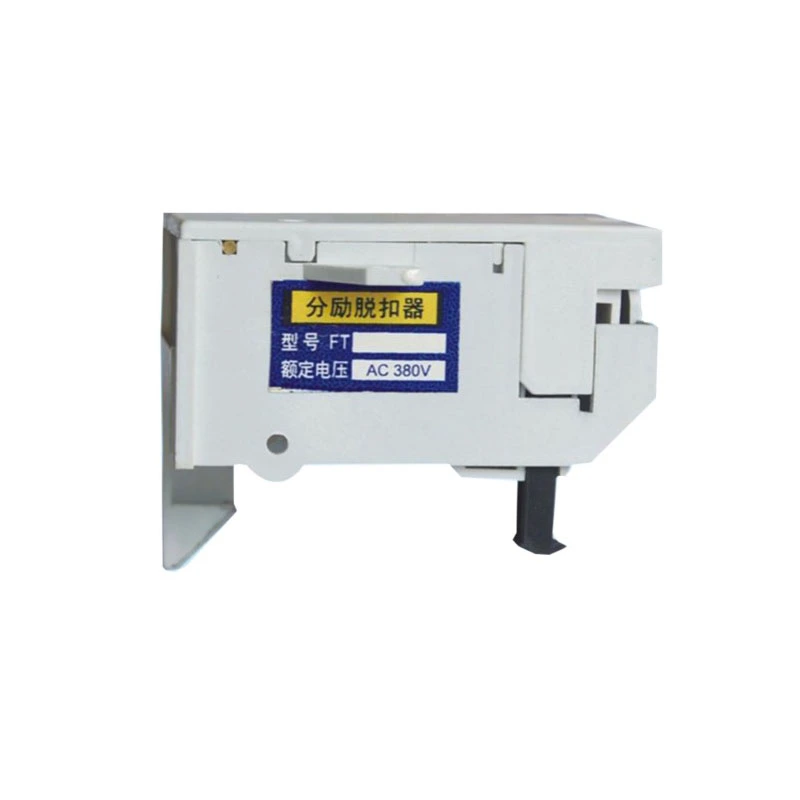
MCCB Shunt Release
Discover the CDADA MCCB Shunt Release for remote control of your circuit breaker operations. Available in 220V AC/DC, it's perfect for applications requiring immediate disconnection. Easy to install, with pre-connected wiring from the factory—just add your control signal. Ideal for industrial and commercial safety systems.
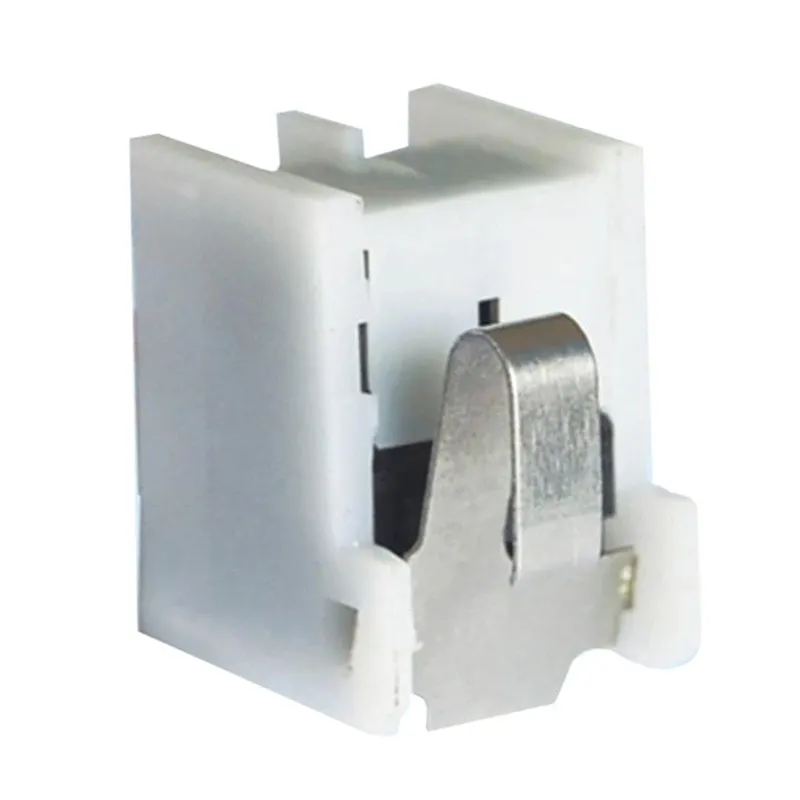
MCCB Auxiliary Contact
CDADA is the manufacturer and supplier of MCCB Auxiliary Contact, this product can be your solution for monitoring and controlling circuit breaker states. Available in configurations like 2NO/2NC, it's ideal for signaling open/close status. Pre-wired for easy installation, perfect for industrial control systems. Trust CDADA for reliability and performance.
CDADA is a MCCB Accessories manufacturer and supplier in China. Our factory serves diverse industries such as power systems, building automation, and industrial manufacturing, offering flexible OEM/ODM solutions.