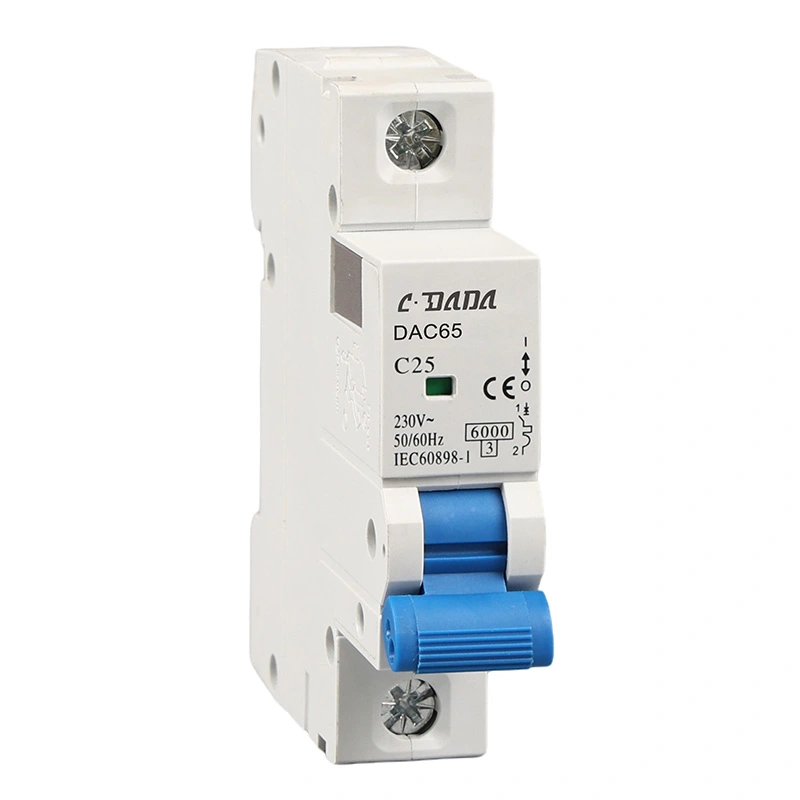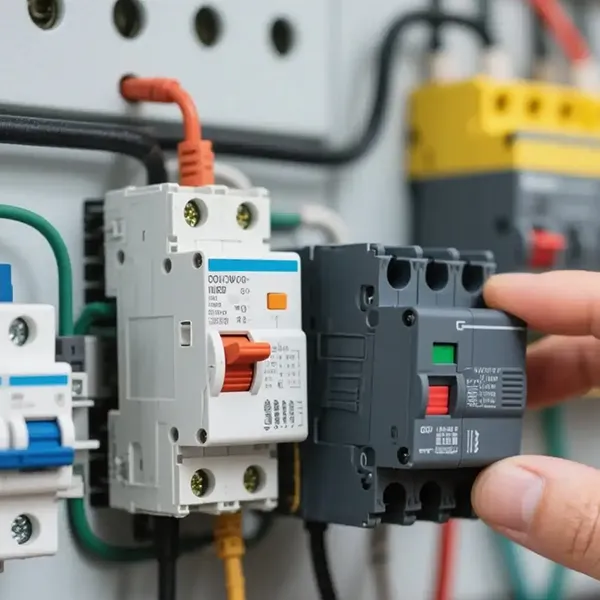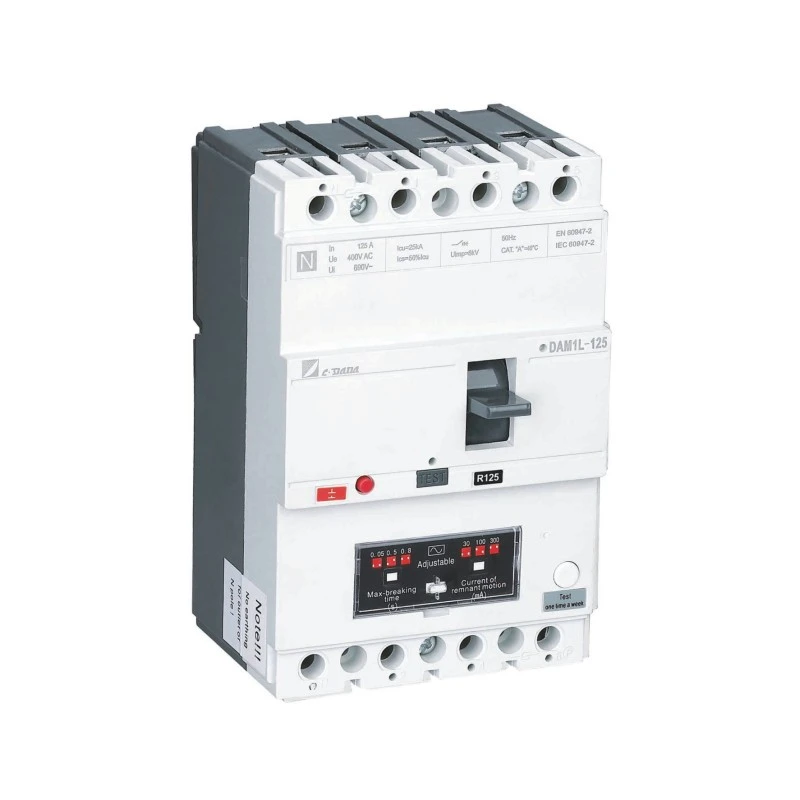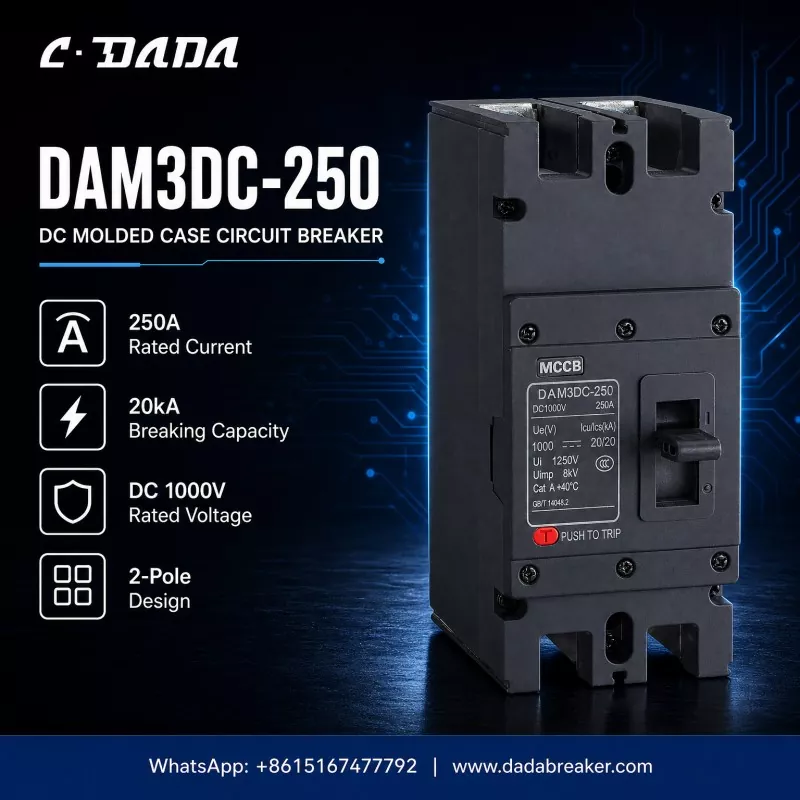
Electrical safety depends on more than preventing short circuits and overloads. Leakage current can also create serious hazards, particularly when damaged insulation, faulty appliances, moisture, or defective wiring allows current to flow through an unintended path.
A Type A Residual Current Circuit Breaker (RCCB) is designed to detect specified forms of residual current and disconnect a circuit when the leakage reaches its applicable tripping conditions. Compared with a Type AC device, it can respond to both sinusoidal alternating residual current and specified pulsating direct residual current, making it suitable for many modern electrical installations containing electronic equipment.
For electrical contractors, panel builders, equipment manufacturers, and purchasing managers, understanding this protection category is essential. Selecting the correct device helps balance personal protection, system reliability, equipment compatibility, and project requirements.
This article provides a practical overview of the operating principle, applications, selection criteria, and maintenance practices associated with Type A RCCBs.

Table of Contents
1. What Is a Type A Residual Current Circuit Breaker?
A Type A RCCB is a protective switching device that monitors the balance of current flowing through the conductors of a circuit. Under normal operating conditions, the outgoing and returning currents balance. If some current escapes through an unintended path, the resulting imbalance can be detected by the device.
When the residual current meets the device's specified operating conditions, the RCCB disconnects the protected circuit. This helps reduce exposure to dangerous electric shock and may provide additional protection against electrical fires caused by certain earth faults.
Which residual currents can a Type A RCCB detect?
Type A devices are designed for:
- Sinusoidal alternating residual currents: Leakage currents with a conventional AC waveform.
- Pulsating direct residual currents: Certain rectified, unidirectional current waveforms that may occur in electronic power supplies and equipment using semiconductor components.
These detection capabilities make Type A protection useful in installations where electronic loads are present. However, Type A devices are not universal detectors for every possible residual-current waveform. Smooth DC leakage and certain frequency-related residual currents may require a different protective device.
RCCB versus RCBO: What is the difference?
An RCCB provides residual-current protection but does not normally provide integral overload and short-circuit protection. It therefore needs suitable coordinated overcurrent protection, such as an appropriately selected circuit breaker or fuse.
An RCBO combines residual-current protection with overcurrent protection in one device. The appropriate choice depends on circuit design, available distribution-board space, coordination requirements, and the level of circuit separation needed.
2. How Does a Type A RCCB Work?
The operating principle relies on detecting an imbalance between the currents flowing through the live conductors. A sensing core monitors the combined magnetic effect of those currents. When the currents balance, their effects substantially cancel. When an earth leakage fault creates an imbalance, the sensing mechanism responds according to the device's design.
If the residual current reaches the applicable operating threshold, the tripping mechanism opens the contacts and disconnects the circuit.
A practical example
Consider a washing machine with an electronic control system. If damaged insulation allows current to leak to an exposed conductive part or an unintended earth path, the current returning through the monitored conductors may no longer balance the outgoing current. A suitable Type A RCCB can detect the relevant residual-current waveform and disconnect the circuit.
The actual response depends on the fault waveform, residual operating current, device characteristics, and installation conditions. An RCCB does not prevent every electrical accident, and protection still depends on correct wiring, earthing, equipment condition, and appropriate circuit design.
A Type A RCCB is not intended to detect all smooth DC residual currents. Certain equipment, including some variable-speed drives and electric vehicle charging systems, can produce residual-current components that require Type F, Type B, or another specifically approved protection arrangement. Always follow the equipment manufacturer's instructions and applicable local regulations.
3. Why Is Type A Residual Current Protection Important?
Improving protection against electric shock
Residual-current protection can disconnect a faulty circuit before a hazardous situation persists. Devices with a 30 mA rated residual operating current are commonly used for additional protection in applications where required by electrical codes. The appropriate rating must be confirmed against the specific installation and local regulations.
Supporting installations with electronic loads
Modern electrical systems contain electronic power supplies, rectifiers, and control circuits that can produce pulsating DC residual currents. A Type A RCCB is designed to detect these specified current forms in addition to sinusoidal AC residual currents.
Helping reduce certain fire hazards
Earth leakage caused by deteriorating insulation or damaged wiring can create electrical hazards. Properly selected residual-current protection can help limit the duration of certain leakage faults. However, it is not a substitute for overcurrent protection, arc-fault protection where required, good connections, or appropriate fire-safety measures.
Supporting dependable electrical system design
Correctly specified protection devices help contractors and facility managers build systems that satisfy design requirements while reducing avoidable interruptions. Appropriate sensitivity, circuit grouping, and device coordination are particularly important in commercial buildings and installations with numerous electronic loads.
4. Where Are Type A RCCBs Commonly Used?
Type A protection is relevant to many low-voltage AC installations, provided the anticipated residual-current waveforms fall within the device's capabilities.
| Application | Typical electrical concern | Selection consideration |
|---|---|---|
| Residential buildings | Electronic appliances, damaged wiring, and earth leakage | Local requirements, sensitivity, and circuit arrangement |
| Commercial offices | Computers, electronic power supplies, and office equipment | Load distribution and continuity of service |
| Retail premises | Electronic equipment, refrigeration controls, and lighting systems | Compatibility with equipment and leakage characteristics |
| Small workshops | Electronic tools and selected single-phase machinery | Motor-drive characteristics and fault-current requirements |
| Building distribution panels | Multiple outgoing circuits and protection coordination | Pole configuration, rated current, and upstream protection |
These examples are general guidance, not blanket approval for every installation. Equipment with inverters, drives, or specialized power converters may generate residual currents beyond Type A's intended detection capability. The manufacturer's instructions and the installation design should determine the final selection.
5. How Does Type A Compare with Other RCD Types?
Residual-current devices are classified according to the forms of residual current they are designed to detect. Choosing the correct type is more important than simply selecting a device with a familiar current rating.
| Device Type | General Detection Capability | Typical Selection Context |
|---|---|---|
| Type AC | Sinusoidal AC residual currents | Applications where the expected fault-current waveform is compatible with Type AC and local rules permit it |
| Type A | Sinusoidal AC and specified pulsating DC residual currents | Many residential and commercial circuits containing electronic loads |
| Type F | Type A waveforms plus specified composite-frequency residual currents | Selected single-phase inverter applications, subject to manufacturer guidance |
| Type B | Type A waveforms plus specified smooth DC and additional frequency-related residual currents | Applications that may generate smooth DC residual current, including certain converters and drive systems |
Type F and Type B characteristics are addressed in IEC 62423, which supplements the applicable requirements for Type A residual-current devices. Actual device capabilities depend on the relevant standard, product specification, and installation requirements.
Why is Type A not always enough?
Some power-conversion equipment can produce smooth DC residual current. Such current may interfere with the correct operation of a Type A device under certain conditions. Where equipment instructions require Type B protection or a specific alternative arrangement, installing a Type A RCCB alone may not provide the intended protection.
For procurement teams, this distinction is essential: a product's nominal current and residual operating current do not establish whether its detection characteristics are suitable for a particular load.
6. How Can You Choose the Right Type A RCCB?
Choosing a Type A Residual Current Circuit Breaker requires evaluating the electrical system as a whole. The following criteria help reduce specification errors and avoid selecting a device that is unsuitable for the intended application.
1. Rated current (In)
The rated current indicates the current the RCCB is designed to carry under its specified conditions. Common product ratings include 25 A, 40 A, 63 A, and higher values, depending on the product range.
Select a rating appropriate to the circuit design and ensure that associated overcurrent protection is coordinated with the RCCB's rated current and installation conditions. The RCCB's rated current should not be confused with its residual operating current.
2. Rated residual operating current (IΔn)
This value indicates the specified residual-current operating level. Common options include 10 mA, 30 mA, 100 mA, and 300 mA, although availability varies by product and market.
- 30 mA: Commonly used for additional protection against electric shock where required or appropriate.
- 100 mA or 300 mA: May be used for other protection purposes, including certain upstream or fire-protection arrangements, when permitted by the applicable design rules.
- 10 mA: Used in selected applications where a more sensitive device is specifically appropriate.
These values are not interchangeable design recommendations. The required sensitivity must be established from applicable regulations, earthing arrangements, expected leakage current, and the intended protective function.
3. Number of poles
Two-pole devices are commonly used in suitable single-phase circuits, while four-pole devices may be used in compatible three-phase circuits. The number of poles, neutral arrangement, and switching requirements must match the supply system and manufacturer instructions.
4. Rated voltage and frequency
Confirm that the product is designed for the installation's rated voltage, phase configuration, and frequency. Compatibility should be verified using the product datasheet rather than inferred from its physical appearance.
5. Standards and product certification
For many household and similar applications, IEC 61008-1 addresses RCCBs without integral overcurrent protection, while IEC 61009-1 addresses RCBOs. Verify the current applicable editions, national adoptions, required certifications, and market-specific conformity documentation before purchasing.
6. Installation environment and system compatibility
Consider ambient temperature, enclosure conditions, mounting requirements, terminal capacity, conductor sizes, and the anticipated leakage characteristics of connected loads. Where nuisance tripping is a concern, investigate the cause rather than simply increasing the residual operating current.
- Confirm the application and expected residual-current waveform.
- Specify rated current and rated residual operating current separately.
- Confirm the pole configuration, voltage, and frequency.
- Check the required standards, certification, and technical documentation.
- Verify coordination with overcurrent protection and other protective devices.
- Request the manufacturer's installation instructions and product datasheet.
7. What Should You Check During Installation?
Correct installation is necessary for a residual-current circuit breaker to operate as intended. Electrical work should be performed by qualified personnel in accordance with local regulations and the manufacturer's instructions.
Verify wiring and conductor routing
Ensure that the conductors specified by the manufacturer pass through the appropriate sensing arrangement. Neutral conductors must be routed correctly, and downstream neutrals from separate protected circuits must not be improperly interconnected. Such wiring errors can cause unwanted tripping or compromise the intended protective arrangement.
Coordinate protection devices
Because a conventional RCCB does not provide integral overload and short-circuit protection, suitable protective devices must be provided. Verify the required breaking capacity of the associated overcurrent device and confirm coordination against the available fault current.
Check terminals and mounting
Use conductors of the specified type and cross-sectional area. Tighten terminals to the manufacturer's stated torque, mount the device securely, and ensure that the distribution enclosure meets applicable environmental and accessibility requirements.
Perform appropriate verification tests
Following installation, qualified personnel should verify the wiring, protective conductor continuity, and operation of the protective system using suitable test procedures and instruments. The built-in test button is useful for checking the device's test mechanism but does not replace all required commissioning tests.
8. How Can You Maintain Reliable Protection?
Routine inspection and testing help identify problems before they become more serious. A maintenance schedule should reflect the manufacturer's instructions, applicable electrical regulations, environmental conditions, and the criticality of the installation.
- Use the test button as instructed. Follow the frequency and procedure specified by the manufacturer and local requirements.
- Arrange periodic professional inspections. Check connections, enclosure condition, wiring integrity, and signs of overheating or moisture.
- Investigate repeated tripping. Possible causes include insulation deterioration, faulty appliances, cumulative leakage, wiring errors, or an incompatible protection type.
- Keep records. Document inspection dates, test results, faults identified, and corrective actions.
- Replace defective equipment. If a device fails the prescribed test or shows signs of damage, have it assessed and replaced when necessary by a qualified professional.
Never bypass an RCCB or repeatedly reset a device without investigating why it trips. Recurrent disconnection is a warning that requires proper diagnosis.
9. What Selection Mistakes Should You Avoid?
Confusing rated current with residual operating current
A 40 A RCCB with a 30 mA residual operating current has two different ratings serving different purposes. One relates to normal current-carrying capability; the other relates to residual-current operation. Both must be specified correctly.
Assuming every Type A device works with every electronic load
Type A protection covers specified AC and pulsating DC residual currents, not every waveform produced by modern electronic equipment. Check inverter, drive, charger, and appliance documentation before finalizing the protection type.
Using an RCCB without suitable overcurrent protection
A conventional RCCB does not replace a circuit breaker or fuse for overload and short-circuit protection. Confirm the required protective arrangement during circuit design.
Selecting products on price alone
A low purchase price may not represent the best overall value if technical documentation is incomplete, terminal specifications are unsuitable, or the device lacks required conformity evidence. Compare the full specification, supplier support, traceability, and application suitability.
Ignoring nuisance tripping
Unwanted trips can result from cumulative leakage, shared neutrals, wiring faults, transient disturbances, or an inappropriate device selection. Diagnose the underlying cause and make changes only after verifying the installation design and applicable safety requirements.
10. Frequently Asked Questions
Q1. What does Type A mean on a residual current circuit breaker?
Type A identifies an RCCB designed to detect sinusoidal AC residual currents and specified pulsating DC residual currents. It is suitable for many circuits containing electronic equipment, subject to the actual load characteristics and local electrical requirements.
Q2. Is a Type A RCCB better than a Type AC RCCB?
Type A offers broader residual-current detection capability because it covers specified pulsating DC waveforms in addition to sinusoidal AC. Whether it is the correct choice depends on the application, equipment, and applicable regulations rather than on a universal ranking of products.
Q3. Can a Type A RCCB detect smooth DC leakage current?
A standard Type A RCCB is not designed to detect all smooth DC residual currents. Applications that may produce such current can require Type B protection or another specifically approved arrangement based on the equipment manufacturer's instructions and applicable standards.
Q4. Does a Type A RCCB protect against overloads and short circuits?
No. A conventional RCCB provides residual-current protection but does not normally include integral overload and short-circuit protection. A suitable circuit breaker or fuse must provide the required overcurrent protection. An RCBO combines these protective functions in one device.
Q5. Is a 30 mA Type A RCCB suitable for residential use?
A 30 mA device is commonly used for additional protection against electric shock in residential applications where required or appropriate. Its suitability depends on local regulations, the circuit, the earthing system, connected equipment, and the manufacturer's specifications.
Q6. How often should a Type A RCCB be tested?
Follow the test frequency and procedure specified by the product manufacturer and local electrical requirements. The test button checks the device's test mechanism, while professional inspection and instrument testing may be necessary to verify the complete protective arrangement.
Q7. Why does a Type A RCCB trip repeatedly?
Repeated tripping may indicate insulation faults, defective appliances, cumulative leakage current, incorrect neutral wiring, transient disturbances, or unsuitable device characteristics. A qualified electrician should investigate the cause rather than bypassing the device or simply fitting a less sensitive model.
Q8. Which information should buyers request from an RCCB supplier?
Request the product datasheet, rated current, rated residual operating current, pole configuration, voltage and frequency ratings, applicable standards, conformity documents, terminal specifications, installation instructions, and warranty information. Confirm that the proposed product matches the project's electrical requirements.
Conclusion: Choosing the Right Type A Residual Current Circuit Breaker
A Type A Residual Current Circuit Breaker is an important component of electrical safety in many modern AC installations. Its ability to detect sinusoidal AC and specified pulsating DC residual currents makes it suitable for a broad range of residential and commercial applications.
However, reliable protection depends on more than choosing the Type A designation. Rated current, residual operating current, pole configuration, system voltage, overcurrent coordination, product conformity, and connected equipment characteristics must all be considered. Where smooth DC or other specialized residual-current waveforms may occur, a different protection type may be necessary.
For electrical contractors, distributors, panel manufacturers, and industrial buyers, a clear technical specification helps simplify product selection and reduce installation risks. Working with a supplier that can provide relevant product documentation and technical support also makes procurement more dependable.
Looking for a Reliable Residual Current Protection Solution?
Shanghai DaDa Electric Co., Ltd. serves customers seeking electrical protection products for a range of low-voltage applications. When evaluating a Type A Residual Current Circuit Breaker, confirm the required ratings, detection characteristics, applicable standards, and installation conditions before placing an order.
Need help identifying the appropriate product specification for your project? Contact us to discuss your requirements, request product information, and explore suitable electrical protection solutions.