Why Is Modular Contactor Becoming Essential in Modern Electrical Control Systems?
Modular contactors have rapidly become a core component in modern electrical distribution and automation systems. Their compact structure, flexible installation, energy efficiency, and long service life make them a preferred choice for residential, commercial, and industrial applications. This article explores what a modular contactor is, how it works, key benefits, selection criteria, application scenarios, common challenges, and future trends. It also provides practical guidance for engineers, contractors, and system integrators seeking reliable switching solutions in increasingly complex electrical environments.
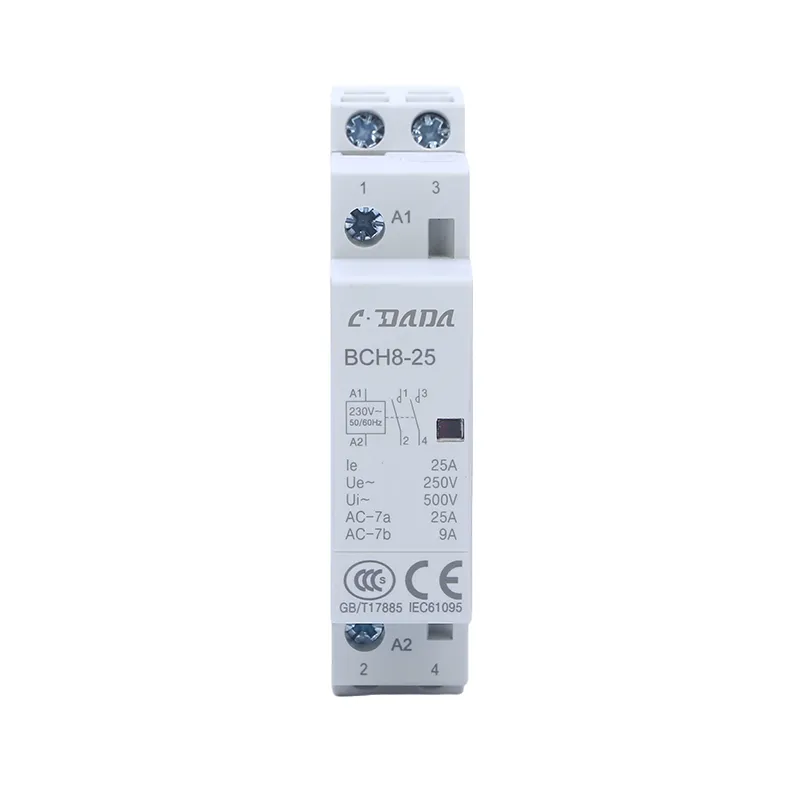
Table of Contents
- 1. Introduction to Modular Contactor
- 2. Structure and Working Principle
- 3. Key Advantages in Modern Systems
- 4. Modular Contactor vs Traditional Contactor
- 5. Application Scenarios Across Industries
- 6. How to Choose the Right Modular Contactor
- 7. Installation and Maintenance Considerations
- 8. Common Problems and Troubleshooting
- 9. Future Trends in Modular Switching Technology
- 10. Frequently Asked Questions
- 11. Conclusion & Contact
1. Introduction to Modular Contactor
A modular contactor is an electrically controlled switching device designed to manage power circuits in a compact, modular format that fits standard DIN rail systems. Unlike traditional bulky contactors, modular contactors are specifically engineered for streamlined electrical distribution panels where space efficiency, safety, and ease of installation are critical.
They are widely used in lighting control, HVAC systems, industrial automation, and smart building infrastructure. Their design aligns with modern demands for automation, energy efficiency, and centralized control.
As electrical systems evolve toward intelligent control and distributed energy management, modular contactors are increasingly becoming a standard component rather than an optional upgrade.
2. Structure and Working Principle
The modular contactor operates on a simple yet highly effective electromagnetic principle. When a control voltage is applied to the coil, it generates a magnetic field that pulls the contacts together, allowing current to flow through the main circuit.
Key components include:
- Coil: Generates electromagnetic force when energized
- Contacts: Open or close the circuit
- Enclosure: Provides insulation and safety protection
- DIN rail housing: Enables modular installation
The design ensures quick switching, low power consumption, and stable operation under varying loads.
| Component | Function | Importance |
|---|---|---|
| Coil | Creates electromagnetic field | Controls switching action |
| Main Contacts | Conduct or interrupt current | Handles load switching |
| Housing | Protects internal components | Ensures safety and insulation |
| Mounting Base | DIN rail installation | Supports modular system integration |
3. Key Advantages in Modern Systems
The growing popularity of modular contactors is driven by several important advantages that address modern electrical engineering challenges.
- Space-saving design: Ideal for compact distribution boards
- Energy efficiency: Low coil power consumption reduces operational costs
- Silent operation: Suitable for residential and commercial environments
- Easy installation: DIN rail mounting simplifies setup
- High reliability: Designed for long switching life cycles
- Flexible control: Compatible with automation systems
These benefits make modular contactors particularly valuable in smart building systems where efficiency and automation are top priorities.
4. Modular Contactor vs Traditional Contactor
Understanding the difference between modular contactors and traditional contactors is essential for selecting the right solution.
| Feature | Modular Contactor | Traditional Contactor |
|---|---|---|
| Size | Compact, DIN rail mounted | Larger, panel-mounted |
| Installation | Quick and modular | More complex wiring |
| Noise level | Quiet operation | Audible switching noise |
| Application | Smart buildings, HVAC, lighting | Heavy industrial systems |
| Energy use | Low coil consumption | Higher energy demand |
While traditional contactors still dominate heavy-duty industrial environments, modular contactors are clearly superior in modern automation-driven systems.
5. Application Scenarios Across Industries
Modular contactors are used in a wide variety of applications due to their versatility and compact design.
- Residential buildings: Lighting control, water heaters, and smart home systems
- Commercial facilities: HVAC control, escalators, and elevator systems
- Industrial automation: Motor switching and machine control
- Energy systems: Solar inverters and battery storage systems
- Infrastructure: Public lighting and traffic control systems
In smart buildings, modular contactors often serve as the backbone of centralized energy management systems, enabling automated load control and scheduling.
6. How to Choose the Right Modular Contactor
Selecting the correct modular contactor is critical for system reliability and efficiency. Several key factors should be considered.
- Rated current: Must match load requirements
- Control voltage: Ensure compatibility with control systems
- Number of poles: Single-phase or three-phase systems
- Duty cycle: Frequency of switching operations
- Environmental conditions: Temperature, humidity, and dust levels
Below is a simplified selection guide:
| Application | Recommended Type | Key Requirement |
|---|---|---|
| Lighting systems | 2P modular contactor | Low noise, frequent switching |
| HVAC systems | 3P modular contactor | Medium load capacity |
| Industrial motors | Heavy-duty modular contactor | High current rating |
7. Installation and Maintenance Considerations
Proper installation ensures optimal performance and long service life. Modular contactors are designed for ease of use, but correct procedures must still be followed.
- Ensure power is disconnected before installation
- Mount securely on DIN rail
- Verify wiring connections according to diagrams
- Check coil voltage compatibility
- Test switching operation before full deployment
Maintenance is generally minimal, but periodic inspection is recommended to ensure contacts remain clean and free from wear.
8. Common Problems and Troubleshooting
Even high-quality modular contactors may experience issues if improperly used or installed.
- Contact welding: Often caused by overload conditions
- Coil failure: Due to incorrect voltage supply
- Overheating: Poor ventilation or excessive load
- Mechanical wear: Frequent switching cycles over time
Troubleshooting should always begin with verifying load conditions, followed by electrical testing of coil and contact integrity.
9. Future Trends in Modular Switching Technology
The future of modular contactors is closely tied to the development of smart grids and intelligent building systems. Several trends are shaping their evolution:
- Integration with IoT-based control systems
- Remote monitoring and diagnostics
- Energy consumption optimization algorithms
- Miniaturization and higher density designs
- Improved arc suppression technology
As automation continues to expand, modular contactors will play an increasingly important role in enabling efficient and intelligent power distribution.
10. Frequently Asked Questions
Q1: What is the main purpose of a modular contactor?
It is used to switch electrical loads in control systems, especially in automation and building management applications.
Q2: Can modular contactors be used in industrial environments?
Yes, but they are best suited for light to medium industrial loads rather than heavy-duty machinery.
Q3: How long does a modular contactor last?
With proper use, it can last hundreds of thousands to millions of switching cycles depending on load conditions.
Q4: Are modular contactors energy efficient?
Yes, they are designed with low coil power consumption, making them highly efficient compared to traditional models.
11. Conclusion & Contact
Modular contactors represent a significant advancement in electrical switching technology. Their compact structure, efficiency, and adaptability make them an essential component in modern electrical systems ranging from residential automation to industrial control networks. As infrastructure becomes increasingly intelligent, the demand for reliable and flexible switching devices will continue to grow.
Manufacturers like Shanghai DaDa Electric Co., Ltd. are contributing to this evolution by developing high-performance modular contactor solutions tailored to global industrial standards.
If you are looking for stable, efficient, and cost-effective modular contactor solutions, our engineering team is ready to support your project requirements.
Contact us today to explore customized solutions and technical support for your electrical control systems.
Related News
- How Does an NSX Moulded Case Circuit Breaker Protect Electrical Distribution Systems?
- What Is a Type A Residual Current Circuit Breaker and How Does It Protect Electrical Systems?
- What Makes an MCCB with Leakage Protection Important for Safer Power Distribution?
- What Makes a 125 15KA Miniature Circuit Breaker Suitable for High-Current Protection?
- How Does a 6kA AC Miniature Circuit Breaker Improve Circuit Protection?
- A Practical Guide to Residual Current Circuit Breakers with Over current Protection
Leave me a message