

Industry News
 20 2026-08
 Why Is Miniature Circuit Breaker REAL 6KA Essential for Reliable Electrical Protection?
Electrical safety has become a critical concern in residential, commercial, and industrial power systems. A reliable protection device can prevent equipment damage, reduce downtime, and improve operational safety. The Miniature Circuit Breaker REAL 6KA is designed to provide dependable short-circuit protection and overload protection with a 6KA breaking capacity. This article explains its working principles, advantages, selection factors, installation considerations, and how it helps solve common electrical protection challenges.
 10 2026-08
 What Makes a Compact Moulded Case Circuit Breaker Essential for Modern Electrical Protection?
A Compact Moulded Case Circuit Breaker (Compact MCCB) plays a critical role in protecting electrical systems from overloads, short circuits, and unexpected power failures. As industrial facilities, commercial buildings, and renewable energy projects demand safer and more space-efficient electrical solutions, compact circuit protection devices have become increasingly important.
 04 2026-08
 Ensuring Sub-Distribution Integrity: The C·DADA DAM1N-125 MCCB Solution
Reliability in industrial power systems is built on the quality of its protection components. The DAM1N-125 is engineered to provide the dependable overcurrent and short-circuit protection required for modern feeder panels and machinery boards.
 03 2026-08
 How Does an Electronic Type Moulded Case Circuit Breaker Improve Electrical Safety and Performance?
Electronic Type Moulded Case Circuit Breaker (MCCB) technology has become an essential solution for modern electrical protection systems. Compared with traditional thermal magnetic circuit breakers, electronic MCCBs provide more accurate protection, intelligent monitoring, adjustable settings, and improved reliability for industrial, commercial, and infrastructure applications.
 30 2026-07
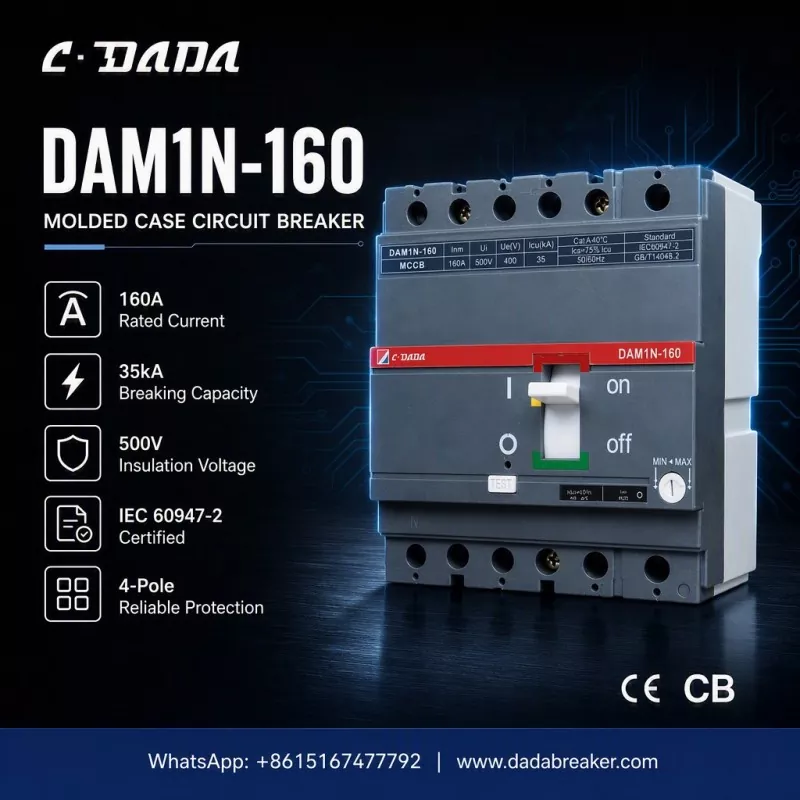
 Precision Protection for Industrial Networks: The C·DADA DAM1N-160 MCCB
Upgrade your electrical safety with the C·DADA DAM1N-160 Molded Case Circuit Breaker. Featuring 160A rated current, 35kA breaking capacity, and full IEC 60947-2 compliance. Ideal for industrial and commercial sub-distribution.
 27 2026-07
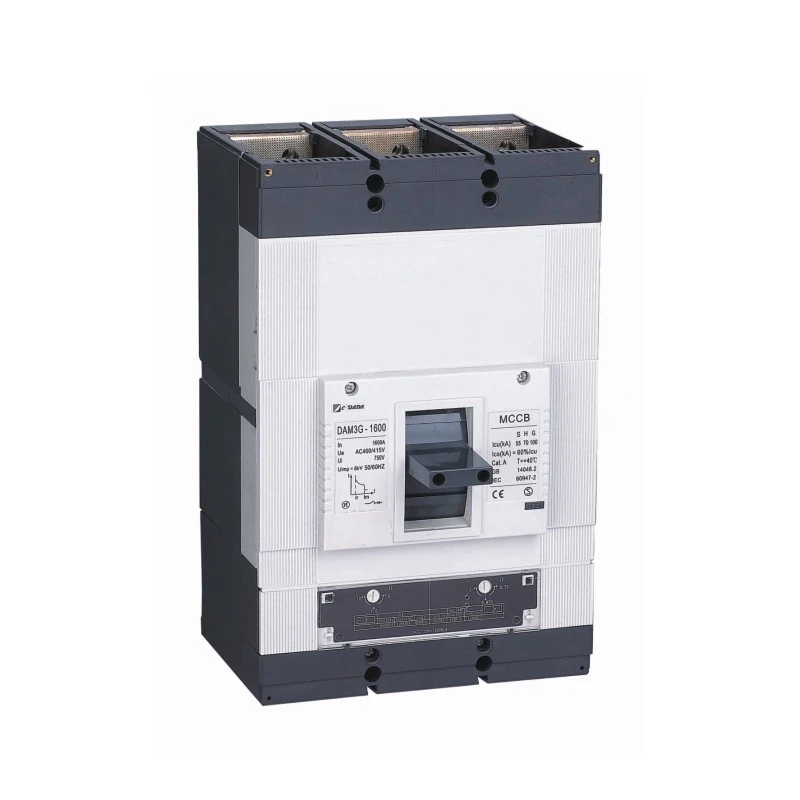
 How Does a Thermal Magnetic Adjustable MCCB Improve Electrical Protection and System Reliability?
A Thermal Magnetic Adjustable MCCB (Molded Case Circuit Breaker) is an essential protection device designed to safeguard electrical systems against overloads and short circuits. By combining thermal protection and magnetic protection with adjustable trip settings, it provides greater flexibility, accuracy, and reliability for industrial, commercial, and infrastructure applications.